A high selling price is not enough. A profitable crop also needs dependable customer demand, good yields, reasonable labour requirements, and efficient use of garden space.
Grow the 10 Most Profitable Vegetables gives you a practical shortlist of crops worth considering, along with field-tested growing methods and a Crop Price Calculator to help determine what makes sense for your own garden and market.
The honest answer: no vegetable is automatically profitable everywhere. Your prices, customers, climate, labour, and sales channel still matter. The guide helps you make that decision with less guesswork.
Growing the Wrong Crops Gets Expensive
You can prepare the beds, plant carefully, control the weeds, and bring in a beautiful harvest—and still make very little money.
Why? Because hard work cannot turn a slow-growing, labour-heavy, hard-to-sell crop into a profitable one.
The first job is choosing the right crops
A promising market-garden crop should offer a practical combination of:
Strong customer demand
A good selling price
Dependable yields
Reasonable labour requirements
Efficient use of bed space
Opportunities for repeat plantings or multiple harvests
This is where many new growers get into trouble. We choose crops because they are familiar, easy to grow, or popular in garden catalogues—not because the numbers make sense.
Grow the 10 Most Profitable Vegetables helps you narrow the field, avoid costly guesswork, and focus your limited space and labour on crops with stronger income potential.
A Better Way to Choose
What the Guide Helps You Decide
The guide does not simply hand you a list and tell you to plant everything on it. It helps you think through which crops deserve space in your own garden, based on your customers, prices, labour, and available growing area.
Is There Enough Demand?
A crop is only valuable when customers are willing to buy it regularly and at a price that leaves room for profit.
Is the Yield Worth the Space?
You will consider how much saleable produce a crop can deliver from a limited amount of bed space.
How Much Labour Does It Require?
Planting, weeding, harvesting, washing, and packing all count. A high-priced crop can still be a poor choice if it eats up too many hours.
How Quickly Does It Produce?
Faster crops may allow more than one planting in the same bed, improving the income potential of that space.
Does the Selling Price Cover the Cost?
The included Crop Price Calculator helps you compare production costs with the price you need to charge.
Does It Fit Your Farm?
The best crop for a large wholesaler may be a poor fit for a backyard grower, CSA, roadside stand, or restaurant account.
The goal is not to grow every profitable crop. The goal is to choose a manageable group of crops that fit your market, your growing system, and the time you actually have available.
Practical Skills You Can Use
What You’ll Learn
The guide walks you through the growing conditions, tools, planting methods,
crop schedules, and production techniques needed to grow these ten crops
efficiently in a small market garden.
1
Set Up the Right Growing Conditions
Choose a site with suitable sunlight and reliable water
Test your soil before spending money on amendments
Improve fertility, drainage, and organic matter
Use compost and other amendments more effectively
Prepare productive beds before planting begins
2
Lay Out an Efficient Market Garden
Use standardized beds to simplify planning and production
Choose practical row and plant spacing for all ten crops
Arrange beds for sunlight, access, irrigation, and equipment
Concentrate soil amendments where crops actually grow
Make better use of every square foot of garden space
3
Water Crops Without Guesswork
Track rainfall instead of relying on assumptions
Choose between drip, sprinkler, and micro-sprinkler systems
Match irrigation methods to direct-seeded and transplanted crops
Group crops to make watering simpler and more efficient
Reduce wasted water while protecting crop health
4
Use Seven Labour-Saving Techniques
Use transplants to gain earlier harvests and reduce thinning
Start multi-seed soil blocks for faster planting
Prepare stale seedbeds before the crop goes in
Use flame weeding to knock back young weeds
Protect crops with row cover and plastic mulch
Plant small seeds quickly with a six-row seeder
5
Plan a Steady Harvest
Use frost dates to plan indoor and outdoor planting
Know which crops should be transplanted or direct seeded
Estimate days to maturity for each vegetable
Schedule repeat plantings at practical intervals
Use succession planting to replace failures and respond to demand
6
Grow and Sell Each of the Top Ten
Follow step-by-step growing directions for every crop
Use crop-specific spacing, watering, and protection methods
Apply productivity tips developed through farm experience
Harvest at the right size and stage for better market appeal
Select varieties with strong flavour, colour, storage, or niche value
You are not just learning what to grow.
You are learning how to organize the beds, reduce unnecessary labour,
schedule repeat crops, protect the harvest, and bring better-looking
vegetables to market.
Take a Look Inside
More Than a List of Ten Vegetables
This is a practical growing system for choosing, planting, and managing
vegetables that can earn their keep in a small market garden.
Know When to Plant—and When to Plant Again
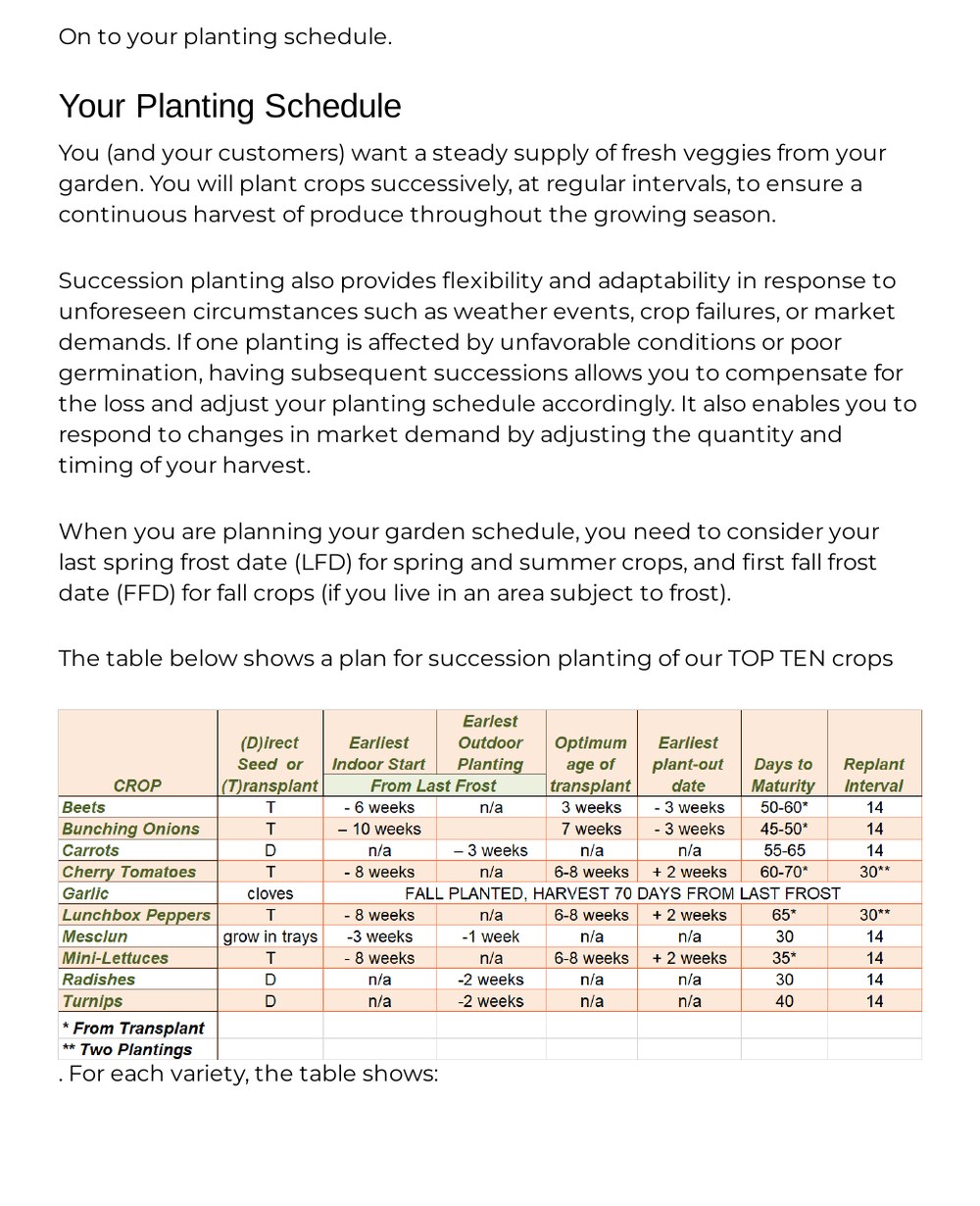
The succession schedule shows whether each crop should be direct seeded
or transplanted, when to start it, when to plant it outdoors, its days to
maturity, and how long to wait before planting the next succession.
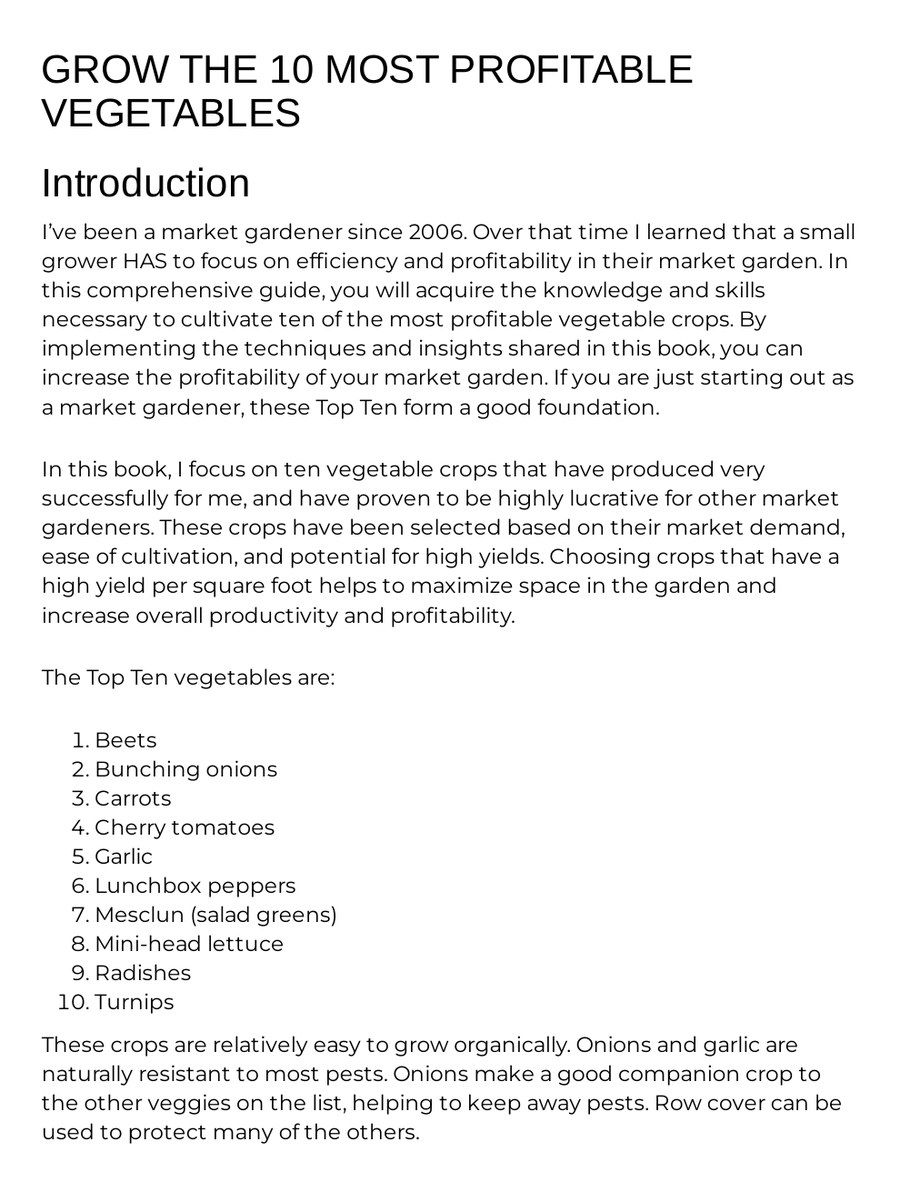
Start With a Field-Tested Shortlist
See the ten crops we have found most useful for combining customer
demand, manageable production, strong yields, and efficient use of
limited garden space.
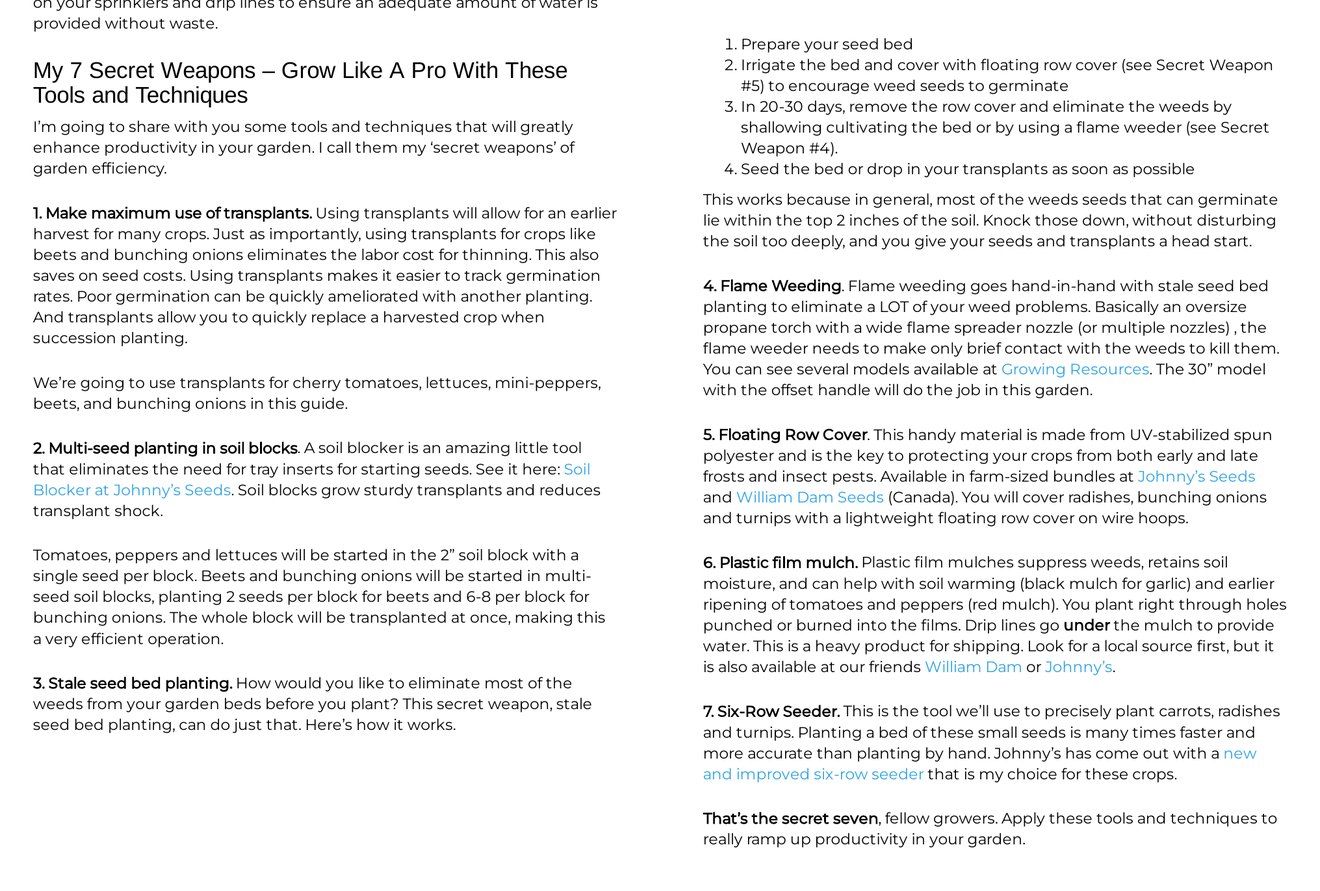
Grow More Without Creating More Work
Learn seven practical tools and techniques for speeding up planting,
reducing thinning, suppressing weeds, protecting crops, and improving
garden efficiency.
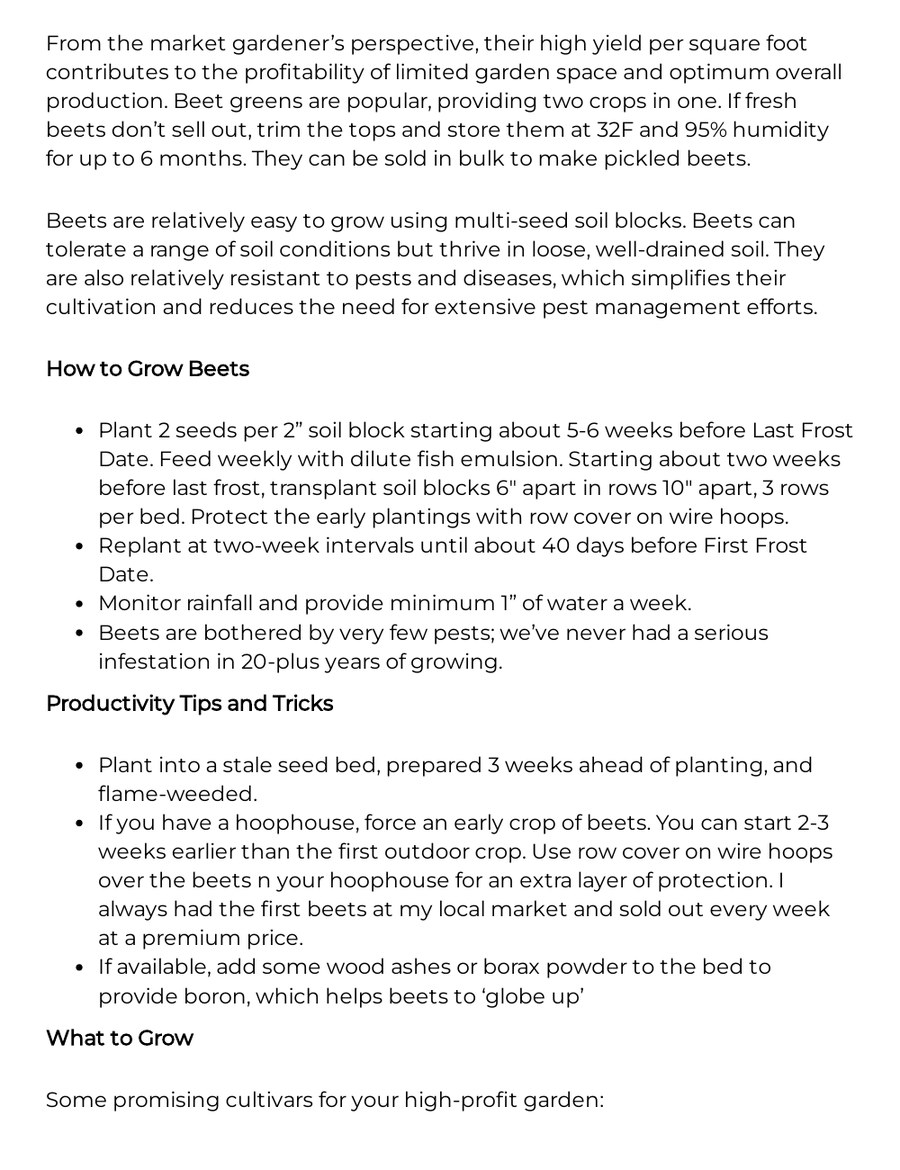
Follow a Practical Plan for Every Crop
Each crop profile covers planting, spacing, irrigation, protection,
harvest timing, productivity tips, and varieties worth considering.
Learn From What Worked—and What Did Not
Real farm examples explain how we changed our production methods to
reduce labour, improve crop quality, and make demanding vegetables
more worthwhile.
Inside the Guide You Will Find:
A shortlist of ten profitable crop possibilities
Recommended bed spacing for every crop
A succession-planting schedule
Garden layout and irrigation guidance
Seven labour-saving tools and techniques
Step-by-step crop-growing instructions
Field-tested productivity tips
Recommended cultivars for market sales
The goal is simple: put your limited space and labour
into crops that have a better chance of producing dependable harvests
and worthwhile sales.
You’ve Seen What’s Inside
Ready to Put the Guide to Work?
Get ten detailed crop profiles, practical planting schedules,
labour-saving growing methods, recommended varieties, and real examples
from our own market garden.
Instant digital access · One payment
· 12-month 10X value guarantee
Crop Price Calculator
Seed & inputs
$—
Labour
$—
Expected yield
—
Price needed
$—
Spreadsheet Included
Included Bonus
Crop Price Calculator
Stop pulling your vegetable prices out of thin air.
A crop can sell for a good price and still make very little money once
we account for seed, supplies, labour, yield, and wasted produce.
The included calculator helps you put real numbers behind your pricing
decisions.
Enter your crop production and input costs
Account for the value of your labour
Estimate your cost per bed, pound, bunch, or unit
Compare expected yield with potential revenue
Calculate a more sustainable selling price
The calculator does not promise that every crop will be profitable.
It gives you a practical way to test the numbers before you commit too
much bed space, time, or money.
The Crop Price Calculator is included at no extra cost
with Grow the 10 Most Profitable Vegetables.
Guide + Practical Pricing Tool
Get Both Practical Tools for One Low Price
Use the guide to decide what to grow and how to produce it efficiently.
Then use the Crop Price Calculator to test whether the numbers make sense
for your own garden and market.
The complete guide and calculator are included together for just $9.
✓ Complete growing guide
Ten crops, planting schedules, productivity methods, and variety guidance.
✓ Crop Price Calculator
Use your own costs, yields, labour, and selling units to test your pricing.
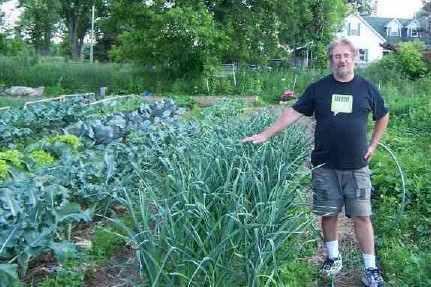
Scott Kelland at New Terra Farm, where the crops and methods in this
guide were tested under real growing conditions.
Practical Advice, Tested in the Field
Built From Real Farm Experience
I have been a market gardener since 2006. Over the years, we planted,
harvested, sold, made mistakes, changed our methods, and learned which
crops could justify the space and labour they required.
The advice in this guide was not assembled from seed catalogues or
gardening theory. It grew out of the daily work of operating a small
market garden and supplying real customers.
When every bed and every working hour matters, the crop has to earn
its keep.
Grown on a Working Farm
The ten crops were selected because they performed well in our own
garden and offered a useful combination of yield, customer demand,
market appeal, and manageable production.
Refined Through Trial and Error
Not every crop or growing method worked the first time. The guide
includes the changes we made to improve planting, weed control,
irrigation, crop protection, and harvesting efficiency.
Focused on Small-Farm Profit
Small growers cannot afford to waste productive beds or valuable
working hours. Every recommendation is intended to help you use your
land, labour, equipment, and growing season more effectively.
A Simple Example From Our Farm
We once found that field-grown mesclun required so much weeding and
cleaning that the crop was no longer worth the trouble.
Instead of giving up on a product our customers liked, we started growing
the greens in inexpensive planting trays filled with soilless mix. The
trays produced clean greens with almost no weeds and usually gave us two
cuttings.
That is the kind of practical adjustment you will find throughout the guide.
We are not aiming for a picture-perfect garden. We are aiming for a
productive garden that earns its keep.
Market gardening since 2006•Award-winning New Terra Farm•Field-tested growing methods•Built for small growers
Recognition for New Terra Farm’s small-farm marketing and operating model
A Farm Model That Earned Recognition
Our Little Farm Won a Big Award
In 2006, The Ministry of Agriculture Ontario held a competition recognizing innovative
farm marketing and operating ideas. A total of 255 farms entered.
New Terra Farm was selected as one of the winners for the practical
small-farm model we had developed.
Suzie grabbed the plaque.
I grabbed the $5,000 cheque.
It helped pay for the farm truck - which seemed like a perfectly
sensible division of the winnings.
I don't mention the award to suggest that every crop or season went
perfectly. They certainly didn't. The award mattered because it
recognized a farm model built around efficiency, direct sales, and
making a small property produce a worthwhile return.
Grow the 10 Most Profitable Vegetables draws on those
same practical lessons: choose crops carefully, control labour, use
limited space well, and grow what customers are prepared to buy.
255 farms entered•National agricultural recognition•Practical small-farm model•Lessons tested at New Terra Farm
More than 2,000 people have bought my books and courses. Here's what some of them are saying:
“Your book took us from ‘hmmm… this might be for us’ to selling five garden shares three weeks later! We’re wrapping up year one and planning 25–30 shares for year two.”
— Dan & Jenn S., Itty Bitty Acres
“I read your book and really wished I had it last year. It has already caused me to re-think and re-design next year’s plan.”
— Sherri, Dunville, ON
“Very clearly written and thorough.”
— Steve G.
“Fantastic reading, and it’ll be really helpful when we start up our farm!”
— Katie W.
10X
Value Guarantee
12 Months
Your Purchase Is Protected
My 12-Month 10X Value Guarantee
Put Grow the 10 Most Profitable Vegetables to work
in your garden for a full year.
If you do not believe the guide delivered at least ten times its
purchase price in saved labour, avoided mistakes, better crop choices,
or increased income, email me within 12 months and I will refund your
purchase.
No complicated forms. No argument.
Just send an email scott(at)new-tewrra-natural-food.com and let me know the guide did not deliver the
practical value you expected.
I can offer this guarantee because the guide is built around practical
methods we have used in our own market garden, not theories assembled
behind a desk.
You have a full growing season to test the advice.
Either the guide earns its keep—or you get your $9 back.
Questions Before You Buy?
Frequently Asked Questions
Here are the practical details about the guide, calculator, download,
and guarantee.
Is this guide suitable for a complete beginner?
Yes. The guide begins with the basics of site selection, sunlight,
water, soil testing, amendments, bed preparation, and garden layout
before moving into crop production.
It is particularly useful for someone starting a small market garden
who wants a manageable crop list rather than trying to grow everything
at once.
Is it useful for backyard growers as well as market gardeners?
Yes. The methods are designed around efficient use of limited space,
so they can be applied to a backyard income garden, a part-time market
garden, or a larger small-farm operation.
You do not need to grow all ten crops. Choose the ones that fit your
space, customers, climate, and available time.
Are these ten vegetables guaranteed to be profitable everywhere?
No crop is automatically profitable in every location. Your local
demand, selling price, climate, labour, yield, and sales channel still
matter.
The guide gives you a field-tested shortlist and practical production
methods. The included Crop Price Calculator helps you test the numbers
for your own situation before committing too much land or labour.
Which vegetables are covered?
The guide covers beets, bunching onions, carrots, cherry tomatoes,
garlic, lunchbox peppers, mesclun, mini-head lettuce, radishes, and
turnips.
Each section includes practical growing directions, productivity
suggestions, and varieties worth considering.
Does the guide include actual growing instructions?
Yes. This is not simply a list of crop names. It covers planting,
spacing, irrigation, crop protection, harvest timing, succession
planting, productivity tips, and recommended cultivars.
It also includes a planting schedule showing when crops can be started
indoors, planted outdoors, transplanted, harvested, and replanted.
Do I need expensive market-garden equipment?
No. Many of the techniques can be used with basic tools and a modest
setup. The guide discusses tools such as soil blockers, row cover,
drip irrigation, flame weeders, plastic mulch, and precision seeders,
but you can adopt them gradually.
The main goal is to reduce repetitive labour and make each bed easier
to manage—not to buy every tool at once.
What is the Crop Price Calculator?
It is a spreadsheet designed to help you estimate crop production
costs and calculate a more sustainable selling price.
You can use it to consider seed and input costs, labour, expected
yield, cost per bed, and cost per pound, bunch, or unit.
Do I need advanced spreadsheet skills?
No. The calculator is intended as a practical working tool. You enter
your own figures into the appropriate fields and use the results to
compare costs, yields, and prices.
Basic familiarity with opening and editing a spreadsheet is enough.
What format is the guide?
The guide is delivered as a digital PDF, and the Crop Price Calculator
is delivered as a spreadsheet file.
You can read the guide on a computer, tablet, or compatible phone, and
print pages for your own use.
How soon will I receive the files?
Access is provided digitally after purchase, so there is no shipping
delay.
Save the files to your computer or cloud storage once you receive
them so they are easy to find when planting season begins.
What does the 10X guarantee cover?
You have 12 months to put the advice to work. If you do not believe
the guide delivered at least ten times its $9 price in saved labour,
avoided mistakes, improved crop choices, or increased income, email
within that period for a refund.
That gives you a full growing season to decide whether the guide earned
its keep.
Start With Better Crop Choices
Put Your Best Beds Into Crops That Have a Better Chance of Paying
Get the practical guide to growing ten field-tested market-garden crops,
along with the planting methods, productivity tips, succession schedule,
and Crop Price Calculator needed to make more informed decisions.
Immediate download. A full year to put the advice to work.
There is very little risk in trying it.
If the guide does not deliver at least ten times its price in useful value
within 12 months, email me for a refund.
Before You Go
Need More Than a Crop Guide?
Grow the 10 Most Profitable Vegetables helps you choose
and produce promising crops. But perhaps you need help putting the
complete small-garden income plan together.
Grow the Top Ten
Helps you select ten promising crops and grow them using practical,
labour-saving market-garden methods.
Backyard to Income Starter Pack
Goes further with broader planning, production, marketing, and income
resources for turning limited garden space into a practical business.
Grow the 10 Most Profitable Vegetables is already included in the complete
Starter Pack.