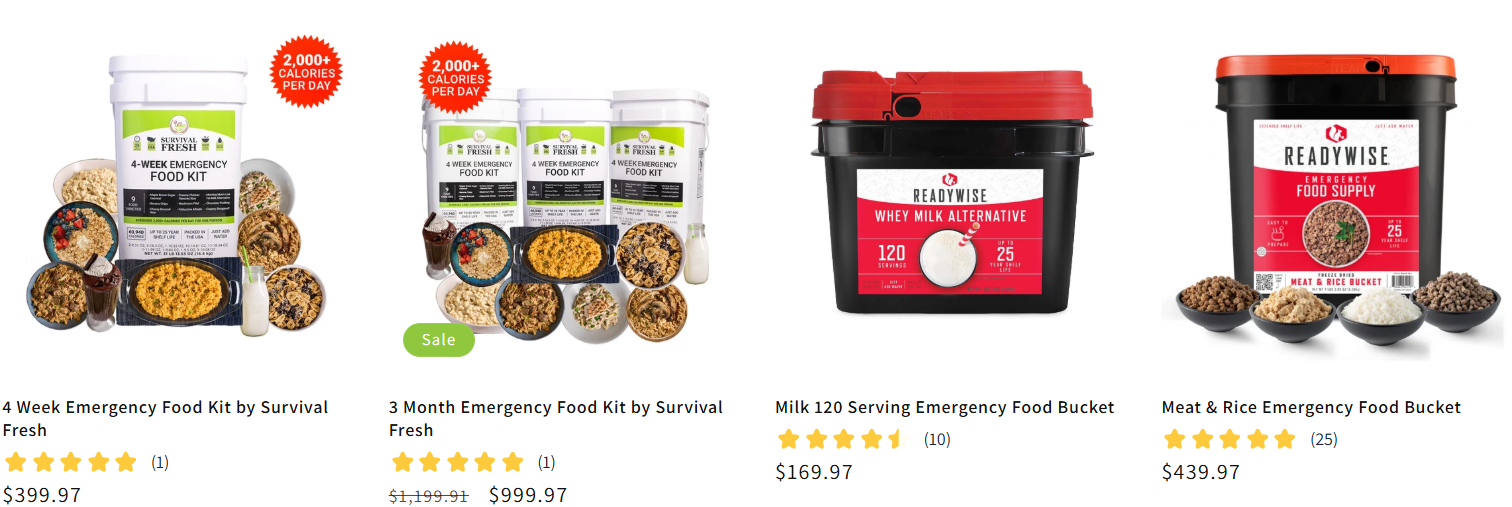
Best Emergency Food Kits for a Homestead PantryHomestead pantry supplies need to justify the space they take up space on a shelf. Every item should give you food you can actually use when the power is out, roads are closed, stores are empty, or a longer disruption makes normal grocery shopping difficult. Most homesteaders already have part of the solution: rice, beans, pasta, canned vegetables, potatoes, stored garden produce, preserves and other everyday pantry foods. Emergency food kits can add another layer of security by providing shelf-stable meals, calories and protein that don't depend on a freezer. For this comparison of the best emergency food kits for a homestead pantry, I looked at four Survival Frog options: the 3-Month Emergency Food Kit, Milk 120 Serving Emergency Food Bucket, Meat & Rice Emergency Food Bucket and 4-Week Emergency Food Kit. My recommendations are based on Survival Frog's published calorie counts, shelf life, meal variety, preparation requirements and how well each kit fits into a practical homestead food-storage plan.
My approach: I don't see emergency food buckets as a
replacement for a well-stocked pantry. I see them as insurance — a
long-lasting reserve that works alongside ordinary staples, home-grown
food and preserved produce.
Jump to a Review
Emergency food works best as one layer of a pantry that also includes
everyday staples, preserved food and home-grown produce.
Best Overall: Survival Fresh 4-Week Emergency Food Kit Best for Longer-Term Storage: Survival Fresh 3-Month Emergency Food Kit Best for Adding Protein: Meat & Rice Emergency Food Bucket Best Pantry Add-On: Milk 120 Serving Emergency Food Bucket Quick Comparison of the Best Emergency Food Kits for a Homestead Pantry
Manufacturer specifications can change. Always check current product information before purchasing. How I Chose the Best Emergency Food Kits for a Homestead PantryThe first thing I look at is not the big serving number printed on the bucket. I look at calories. A "serving" is not necessarily a meal. Some emergency-food servings contain fewer than 200 calories, so a bucket advertised as 120 servings may provide much less food than the headline suggests. For a practical homestead pantry, I considered:
That's why the 4-Week Emergency Food Kit gets my overall pick. Its published calorie count works out to more than 2,000 calories per day, which makes the "four-week" claim considerably more meaningful than a simple serving count. 1. Survival Fresh 4-Week Emergency Food KitBest for: Someone building their first serious month-long emergency food reserve. 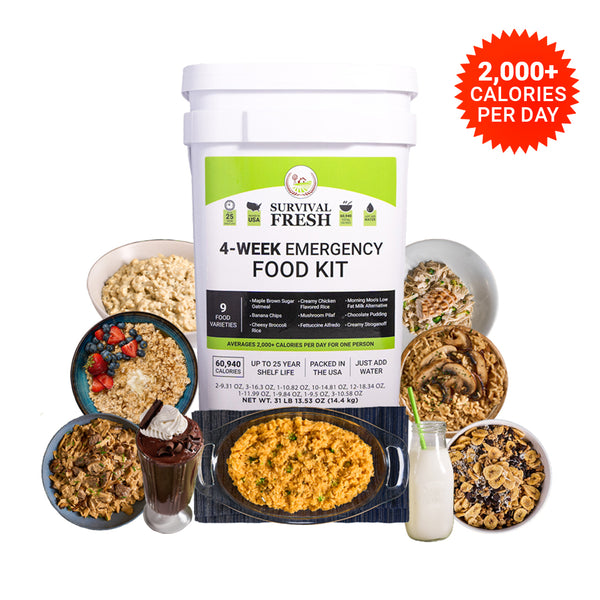
If I were starting from scratch, this is the kit I'd look at first. Survival Frog currently lists 60,940 total calories, or more than 2,000 calories per day for one adult over four weeks. The kit includes nine meal and drink varieties covering breakfast, lunch, dinner, milk and dessert. The food is packed in Mylar bags with oxygen absorbers and stored in stackable buckets designed for long-term storage. For a homestead pantry, a month is a useful target. It's long enough to provide meaningful protection against a serious disruption without requiring the storage space or upfront cost of a three-month reserve. Why I Like ItThe calorie count is substantial enough that "four weeks" means something. I also like the fact that it includes several different meals rather than simply one bulk staple. Watch Out ForThese meals require water, and many of the foods are built around rice, pasta and similar carbohydrate-rich ingredients. I'd supplement the kit with stored protein such as canned meat, beans or other foods. 2. Survival Fresh 3-Month Emergency Food KitBest for: Homesteaders who want a substantial food reserve for an extended disruption. 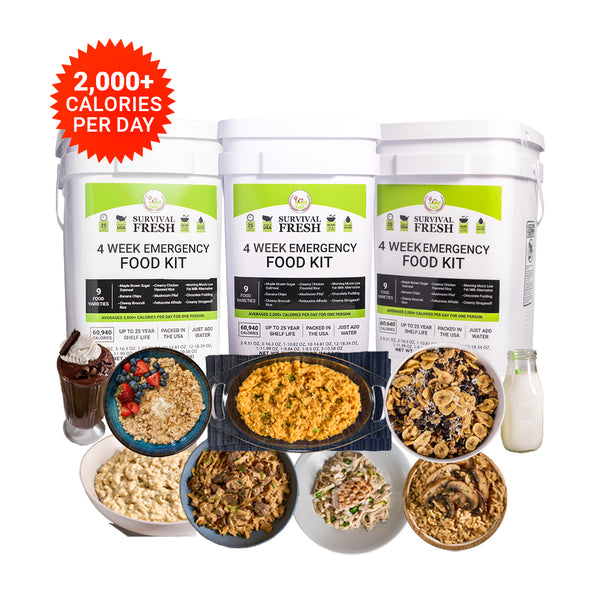
The 3-Month Emergency Food Kit takes the same basic concept as the 4-week version and builds it into a much larger reserve. Survival Frog currently lists 182,820 total calories, again designed to provide more than 2,000 calories per day for one adult. It includes nine food and drink varieties packed in Mylar bags with oxygen absorbers and stored in stackable buckets. Three months is a very different level of preparedness from having a few days of food for a storm. For a rural household, it could provide a valuable buffer against long supply disruptions, extreme weather, financial problems or any situation where replenishing the pantry becomes difficult. Why I Like ItThis is a meaningful long-term food reserve. For someone who wants to put a substantial amount of emergency food away and largely forget about it, the 25-year published shelf life is attractive. Watch Out ForYou're making a much larger investment and committing to the same basic group of food varieties. I would be reluctant to buy three months of any emergency food unless I'd first tried some of the meals. 3. Meat & Rice Emergency Food BucketBest for: Adding shelf-stable meat and protein to a pantry already stocked with staple foods. 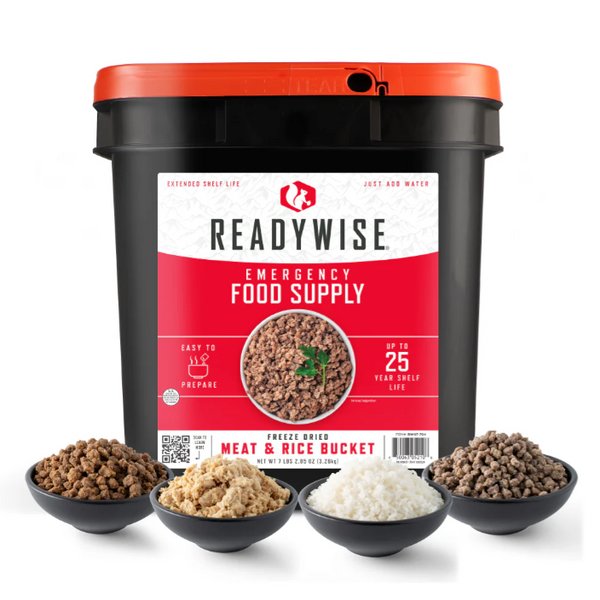
This is a different kind of emergency-food product. Rather than trying to provide breakfast, lunch and dinner for a defined period, it combines rice with freeze-dried meat. The current 88-serving bucket includes white rice plus cooked beef crumbles, diced chicken and sausage crumbles. Survival Frog lists 16,320 total calories and a 15-year shelf life. This makes sense to me for a homestead pantry because grains and vegetables are relatively easy and inexpensive to store. Shelf-stable meat is usually the harder part. Why I Like ItIt addresses one of the biggest weaknesses in many emergency pantries: protein. The meat can be combined with beans, vegetables, rice, potatoes and other foods you're already storing. Watch Out ForThis isn't a complete emergency-food plan by itself. It's better thought of as a pantry component. 4. Milk 120 Serving Emergency Food BucketBest for: Adding shelf-stable milk to a pantry already stocked with meals, grains, cereals and other basic foods. 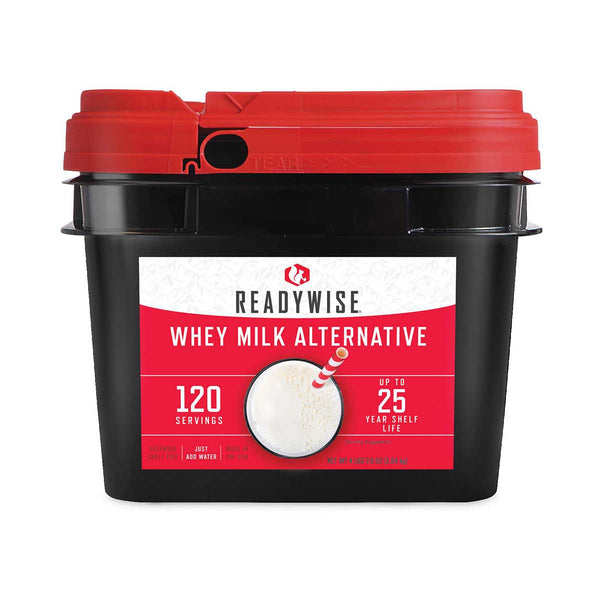
The Milk 120 Serving Emergency Food Bucket isn't a complete emergency food kit on its own, but it fills a gap that is easy to overlook. Survival Frog currently lists 120 servings of whey milk alternative, packed as 10 pouches with 12 servings per pouch. Each serving provides 70 calories and 2 grams of protein, for a total of 8,400 calories in the bucket. Preparation is simple: add one cup of water per serving. For a homestead pantry, milk can be useful with oatmeal, cereal, baking mixes, hot drinks and other foods where powdered milk adds both calories and familiarity. Why I Like ItIt's an easy way to add a long-life dairy-style product to a pantry without depending on refrigeration. It also complements breakfast foods and baking staples that many homesteaders already store. Watch Out ForThis is a pantry supplement rather than a complete meal solution. At 70 calories per serving, it should not be treated as a major source of emergency calories. It contains milk and may also be produced on equipment that processes soy, wheat, egg and tree nuts. Don't Buy Emergency Food Based on Serving Count AloneThis is one of the most important things to understand when comparing emergency food. A serving is not necessarily a meal. The Milk 120 Serving Emergency Food Bucket is a perfect example. It contains 120 servings, which sounds substantial, but those servings add up to only 8,400 total calories. By comparison, the 4-Week Emergency Food Kit contains 60,940 total calories. That's why serving count by itself isn't a very useful way to compare emergency-food products.
Simple buying rule:
Look first at total calories, then protein, meal variety and preparation
requirements. Treat the serving number as secondary.
Emergency Food Doesn't Work Without WaterFreeze-dried and dehydrated emergency meals generally depend on water. That means stocking months of emergency food while ignoring water only solves half the problem. Your plan should include enough water for drinking, food preparation and basic hygiene, plus a dependable way to filter or purify additional water if the disruption lasts longer than expected. One product that fits well with this kind of pantry planning is the Survival Frog WaterBrick Storage Container. These stackable containers are designed to make stored water easier to organize, move and fit into limited storage space. 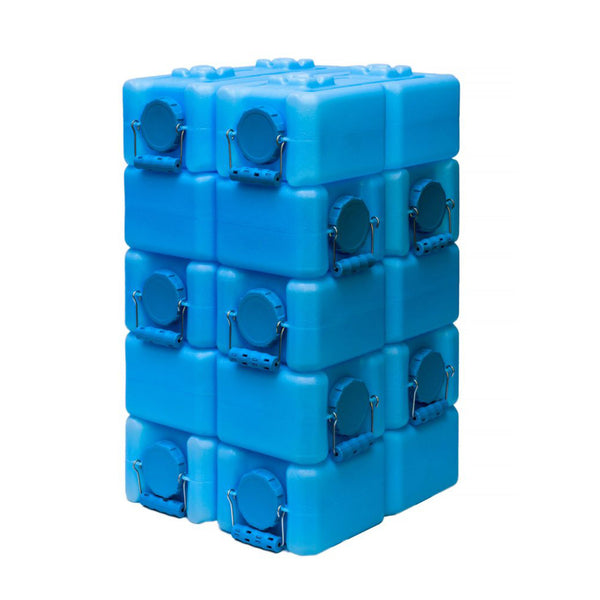
I like the WaterBrick concept because it treats water storage as part of the overall pantry system rather than as an afterthought. Stackable containers can be easier to manage than relying only on large drums, especially if you want to spread stored water between a basement, pantry, garage or other storage areas. The picture shows 10 bricks, 35 gallons stacked in a small footprint. This is also why I like keeping some ready-to-eat foods, such as canned meat , alongside freeze-dried meals. They give you something substantial to eat without drawing down your stored water simply to prepare dinner.
Why I like it:
Water storage is often the weakest part of an emergency-food plan.
A modular container system makes it easier to build water reserves in
stages instead of waiting until you have room for a large tank or barrel.
Check Current WaterBrick Price →
Planning tip:
Treat emergency food and emergency water as one system. The more
freeze-dried food you store, the more important your water-storage plan
becomes.
How Emergency Food Fits a Homestead PantryI wouldn't try to build my entire food reserve out of emergency-food buckets. They're much more useful as one layer of a diversified pantry. Your everyday storage might include:
Emergency kits then become your insurance layer rather than your entire food plan. That approach also works naturally with planning a survival garden . Your garden supplies vegetables and other foods you can eat fresh or preserve, while the emergency pantry provides calories and proteins that are harder to produce or store quickly. Which of the Best Emergency Food Kits for a Homestead Pantry Would I Choose?If I were starting from scratch, I'd choose the 4-Week Emergency Food Kit. A month is a substantial reserve, the calorie count is realistic, and it gives you a strong emergency-food foundation without committing to three months of meals you've never tried. Once I had that covered, I'd consider the 3-Month Emergency Food Kit if I wanted a much deeper reserve. If my pantry was already strong on grains and vegetables but short on shelf-stable meat, I'd look at the Meat & Rice Emergency Food Bucket. And if I already had meals and staple foods covered but wanted a shelf-stable milk option for oatmeal, cereal, baking and other everyday uses, I'd consider the Milk 120 Serving Emergency Food Bucket. The important distinction is that the milk bucket is a supplement to the pantry, not a substitute for a complete emergency-food kit. A Better Strategy Than Buying One Giant Emergency Food KitIf I were building a homestead pantry from scratch, I wouldn't spend the entire budget on one huge package of emergency food. I'd build the pantry in layers. Layer 1: Foods You Already EatRice, pasta, oats, beans, canned vegetables, tomato products, oil and other inexpensive staples. Layer 2: Home-Grown and Preserved FoodPotatoes, onions, carrots, squash, canned tomatoes, pickles, preserves and dehydrated vegetables. Layer 3: Stored ProteinCanned meat, freeze-dried meat, beans and other protein sources that turn simple staples into satisfying meals. Layer 4: Long-Life Emergency MealsA 4-week or 3-month emergency-food kit that can sit on the shelf as insurance when the rest of the pantry starts running low. That gives you better variety, more flexibility and usually a lower total food cost than depending entirely on commercial emergency meals. My Bottom LineThe best emergency food kits for a homestead pantry aren't necessarily the ones with the largest number printed on the bucket. Look at calories, protein, variety, water requirements and how well the food complements what you're already storing. Best Overall — 4-Week Emergency Food KitMy first choice for someone establishing a meaningful emergency-food reserve. Best for Longer-Term Storage — 3-Month Emergency Food KitA serious reserve for households preparing for extended disruptions. Best for Adding Protein — Meat & Rice Emergency Food BucketParticularly useful when your pantry already contains plenty of grains, vegetables and inexpensive staples. Best Pantry Add-On — Milk 120 Serving Emergency Food BucketA useful addition for oatmeal, cereal, baking and other situations where shelf-stable milk adds both nutrition and familiarity. My preferred approach is simple: store ordinary food first, grow what you can, add shelf-stable protein, then use long-life emergency foods and pantry supplements to fill the remaining gaps. See Current Emergency Food Options →Affiliate disclosure: Some links on this page are affiliate links. If you make a purchase through one of these links, I may receive a commission at no additional cost to you. Product specifications, prices, promotions, availability, recipes and shipping policies can change. Check the manufacturer's current information before purchasing. |
- Home
- Best Emergency Food Kits Homestead Pantry
