Market Garden Profit Planning: Turn Growing Space Into IncomeFive Practical Market Garden Models to Help You Plan Before You Plant
Growing Space + Realistic Sales Targets
− Costs = Profit Potential
A productive garden isn't necessarily a profitable business. We can fill every bed with vegetables, work long hours, and still finish the season wondering where the money went. The problem often starts before we plant the first seed. How many beds can we reasonably manage? Which crops should get priority? How much do we need to sell? And where will those sales come from? In The Simple Guide to Profit Planning for Market Gardeners, we'll work through five practical market garden models that connect growing space, crop selection and potential sales income. You'll explore approaches ranging from an eight-bed starter operation to a 40-bed market garden, with different combinations of CSA, market and restaurant sales. The goal isn't to grow more vegetables. It's to develop a plan for selling what you grow at a worthwhile return. 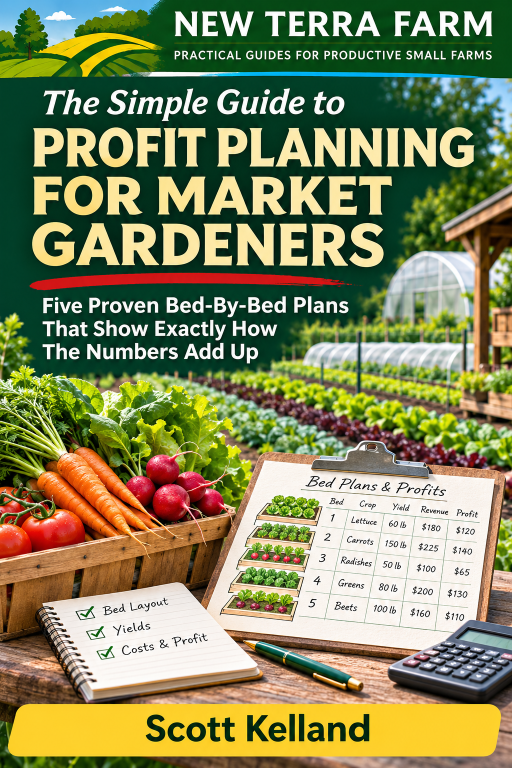
THE $4 FARMER'S LIBRARY US$3.99 Includes five market garden models with sample bed allocations and sales targets. Buy 3 Guides, Get the 4th FREE! Mix and match eligible $4 Farmer's Library ebooks. Add any four guides to your cart and save 25% automatically. Digital ebook • One-time purchase • No coupon required Why Market Garden Profit Planning MattersMany small growers start with their favourite crops and work backward toward finding customers. Unfortunately, a productive garden can still be a disappointing business. When we don't connect growing space, expected sales, and labour, we can end up with plenty of vegetables but very little money left over. A better approach is to choose a realistic income target, decide how to reach customers, and allocate beds to support those sales. Every bed should have a job. Every crop should have a customer. Could Eight Garden Beds Support a Small Farm Business?Let's look at the Small-But-Mighty Plan from the book. This example uses just eight intensively planted beds of 100 square feet each. The proposed crops are straightforward: lettuce, salad mix, carrots, radishes, spinach, green onions, and herbs. Illustrative Seasonal Sales Plan 15 CSA shares at $500 = $7,500 Restaurant sales: $300/week x 20 weeks = $6,000 Total Gross Revenue Target: $13,500 That's gross revenue, not profit. Seeds, supplies, labour, losses, and other operating costs still matter. And the production assumptions must be tested against your own yields, season length, prices, and customer demand. But it demonstrates the value of planning: start with the money, then work backward to the beds needed to support it. Five Market Garden Profit Plans to ExploreThere's no single perfect small-farm business model. The right approach depends on your land, available time, customers, and income goals. The guide explores five alternatives:
Each example includes crop allocations, sales assumptions, and revenue targets you can evaluate against your own situation. The best plan isn't necessarily the biggest one. It's the one that fits your resources and your customers. Revenue Is Not ProfitA $20,000 revenue target looks attractive. But how much will it cost to produce, harvest, package, and deliver those vegetables? That's why these plans are starting points, not promises. Before committing to a model, compare its projected sales with your own costs, labour requirements, growing conditions, and available customers. Good profit planning helps us make those decisions before we've spent the money and planted the crops. Practical Profit Planning From New Terra FarmI'm Scott Kelland, an organic grower, author and small-farm business adviser at New Terra Farm in Ontario, Canada. Together with my wife Suzie, I developed New Terra Farm around sustainable growing, direct sales and practical management systems designed for small-scale producers. Our farm's marketing and management model received the Ontario Premier's Award for Agri-Food Innovation Excellence in 2006. Over the years, we've seen that growing more vegetables doesn't automatically produce more income. The most useful question isn't simply what we can grow. It's what we can sell, to whom, and at what return for our work. That's the approach behind The Simple Guide to Profit Planning for Market Gardeners. Start with your customers, work backward to the crops and beds you'll need, and keep an eye on the numbers. Make Your Market Garden Plan Before You Plant.Explore five practical growing and sales models to help you decide what to plant, how much space to use, and how your garden could generate income. Just US$3.99 Five illustrative market garden plans, from eight beds to forty. Buy 3 Guides, Get the 4th FREE! Choose any four eligible guides from the $4 Farmer's Library and save 25% automatically at checkout. Digital download • One-time purchase • No coupon required Happy growing! More Practical Guides for Small GrowersThe Simple Guide to Profit Planning for Market Gardeners is part of New Terra Farm's $4 Farmer's Library, a growing collection of affordable ebooks covering productive gardening, small farm income, marketing, and farm management. Each guide tackles a specific problem with practical advice you can put to work. Individual guides: US$3.99 each. Discounted collections also available. |
