Plan a Small Garden for Food and Income Everything worth building needs a plan, a schedule and a budget. That includes a successful small garden Planning a small garden for food and income sounds simple enough. Plant some vegetables, eat what you need, store a few for winter, and maybe sell the surplus. What could possibly go wrong? Well, plenty. Especially if you've ever spent a chilly February evening browsing seed catalogues and decided you absolutely needed to grow 27 different varieties of vegetables. Fast forward to July. The zucchini are threatening to take over the neighbourhood, half the lettuce has bolted, and you've discovered that nobody in the family likes turnips nearly as much as you thought they did. Meanwhile, you're buying carrots at the grocery store because you didn't plant enough. Sound familiar? After more than two decades of growing food at New Terra Farm, I've learned that one of the most important questions a gardener can ask isn't "What should I grow?" It's "How much should I actually grow?" And the answer depends on what you want your garden to accomplish. Are you growing fresh vegetables for your household? Trying to put away enough staples to get through the winter? Or hoping to earn some extra income from your garden? Each objective calls for a slightly different plan. And if you want to accomplish all three, you'll need to think carefully about crop selection, growing space, and how much time you're prepared to spend working in the garden. Here's how I would approach it, based on the methods we've used at New Terra Farm. Start With Your Goals, Not Your Garden SizeHere's a mistake I see gardeners make all the time. They look at the land available and start figuring out how much they can plant. But that's working backwards. At New Terra Farm, we learned to start by deciding what results we wanted, then figuring out what resources we needed to produce those results. It's the foundation of the planning approach I've written about in Bootstrap Market Gardening and Planning for Profit. The same principle applies whether you're growing for your family or running a commercial market garden. For our purposes, let's divide small gardens into three categories.
Of course, these categories overlap. A well-designed garden might supply all three needs. But we need to calculate them separately before combining them into a planting plan. Otherwise, it's easy to produce an impressive quantity of vegetables without producing the particular vegetables we need. 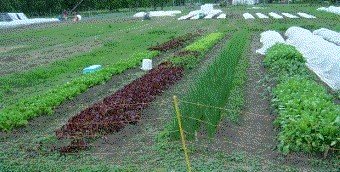 It's a big garden but all of it was sold before I started planting How Much Food Should Your Small Garden Produce?When you plan a small garden for food and income start with the simplest objective: feeding ourselves. Most vegetable gardening advice begins with a suggested number of plants per person. That's useful as a rough guide, but it has an obvious weakness. Not everybody eats the same things. If your family eats a big salad every evening, your lettuce requirements will be considerably different from those of a family that eats salad once a week. So rather than starting with how many plants to grow, let's start with how much food we actually use. Work Backwards From Your Dinner TableFor each vegetable you regularly eat, estimate the quantity your household consumes every week. Then multiply that by the number of weeks you want to supply it from your garden. Weekly consumption x Number of weeks = Total harvest required For example, suppose your household eats two pounds of carrots each week, and you'd like to supply them from the garden for 20 weeks. That's 40 pounds of carrots you need to harvest. If you also want another 40 pounds for winter storage, your total carrot requirement becomes 80 pounds. These are illustrative quantities, not recommended consumption levels. Your numbers will depend on your household. Here's a simple worksheet you can use to start calculating.
Don't worry about getting the numbers exactly right on your first attempt. Check what you've been buying at the grocery store over the past couple of weeks. That's a good starting point. You'll discover pretty quickly which crops deserve the most growing space. Don't Forget Winter StorageIf food security is part of your objective, make a separate list of crops you want to store, freeze, can, or otherwise preserve. Storage crops deserve special attention because they can supply food long after the garden stops producing. For example, a successful potato harvest might last your family well into winter, while properly stored carrots and beets can extend your supply of homegrown vegetables for months. You'll also need somewhere suitable to store that harvest. Growing 200 pounds of potatoes isn't particularly helpful if you have nowhere to keep them. And remember that not everything you harvest will necessarily reach the dinner table. Allow for damaged produce, storage losses, and crops that don't perform as expected. The important point is that we're now working with an actual food requirement, rather than an arbitrary number of plants. 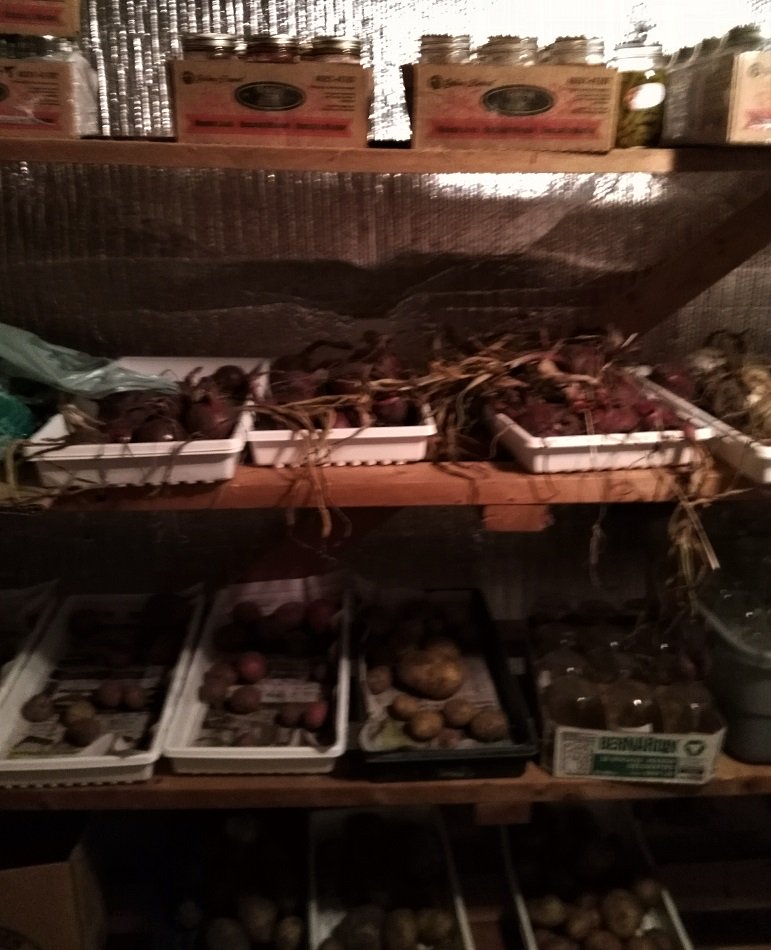 I built an R40 insulated cold room to keep the harvest Planning a Small Garden for Food and Income: Find Buyers FirstNow let's add another objective: making some money. There's nothing wrong with selling surplus vegetables. In fact, it's a sensible way to recover some gardening costs. But if you want to generate reliable income, depending on surplus production isn't much of a business model. Here's why. Suppose you have a bumper crop of tomatoes. You put a sign at the end of your driveway offering tomatoes for sale. Unfortunately, everybody else in the neighbourhood has tomatoes too. Prices are low, and the people who might have bought yours already have more than they can eat. Great growing. Not-so-great marketing. At New Terra Farm, we developed a different approach: find your customers before growing the crops. Our Community Supported Agriculture (CSA) model allowed us to identify customer demand and plan production accordingly. Instead of hoping somebody would buy what we grew, we could plan to grow what our customers wanted. This is particularly important for small growers because we don't have unlimited land, labour, or money to absorb mistakes. Here's a Simple Income ExampleIn my book The Simple Guide to Side-Hustle Farming, I describe a small CSA model based on a manageable number of customers. Consider this illustrative example:
15 x $25 x 20 weeks = $7,500 in gross sales. That's not profit. We still need to account for seeds, supplies, packaging, equipment, labour, and other expenses. But now we have something useful: a sales target. We can work backwards to calculate how much produce we need for those 15 customers, which crops to grow, and how many beds we might require. And because we know what we're trying to achieve, we can avoid spending money growing vegetables that nobody wants to buy. Of course, this works best when those customers have actually committed to purchasing. A list of people who say they might be interested isn't the same thing as 15 paying customers. Start small, prove the demand, and expand when your production and marketing systems can support it. How Much Space Does a Small Garden for Food and Income Need?Now that we have an idea of how much food we want and how much we might sell, we can start thinking about growing space. Here's an important distinction: the total area of your garden isn't the same as the productive growing area. Paths, access lanes, compost bins, and other facilities all take up room. That's one reason I strongly recommend using standard-sized growing beds. Standard Beds Make Planning EasierAt New Terra Farm, we used permanent raised growing beds approximately 30 inches wide and 50 feet long, laid out on 48-inch centres with paths between them. That's 125 square feet of growing area per bed. For a smaller home garden, you could use beds half that length, or shorter if your site requires it. The important thing is consistency. Standard beds simplify several jobs:
For example, ten 30-inch by 25-foot beds give you 625 square feet of actual growing area, before allowing for paths. That's a useful planning unit. But it doesn't automatically tell us how many pounds of vegetables we'll harvest. Convert Your Harvest Requirements Into Growing SpaceLet's return to our earlier carrot example. We calculated that our household wanted 80 pounds of carrots for fresh use and storage. To determine how much space to plant, we need a reasonable estimate of the harvest we can expect per square foot or per bed. That estimate should come from local growing experience, records from previous seasons, or reliable production data for the particular crop and growing system. Once we have that estimate, the calculation is straightforward: Total harvest required ÷ Expected usable yield per square foot = Growing area required. We also need to allow for crop losses and other uncertainties. For commercial production, we routinely plan some additional capacity rather than assuming every plant will produce a perfect harvest. And remember that yield isn't simply a function of square footage. Soil fertility, sunlight, irrigation, plant spacing, variety selection, weather, and pest management all affect the outcome. This is where practical records become very useful. After a season or two, you'll have your own production numbers instead of relying on somebody else's estimates. That's a much better foundation for planning next year's garden. 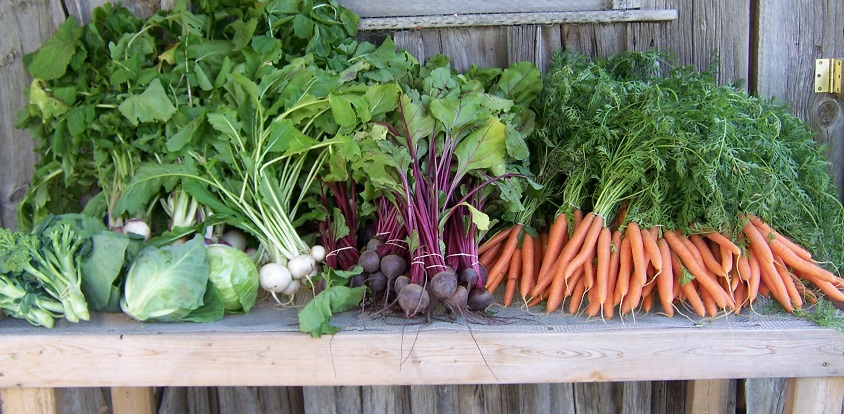 The reward for all your planning and hard work Choose Crops That Earn Their Place in the GardenEvery crop takes up space, uses water and nutrients, and requires some of your time. So every crop needs to earn its place. That doesn't necessarily mean earning money. A vegetable your family loves and eats regularly has obvious value even if you never sell a pound of it. But when we're planning a small garden for food and income, it makes sense to consider three broad categories of crops. 1. Everyday Fresh Food CropsThese are the vegetables you use regularly throughout the growing season. Examples include salad greens, lettuce, radishes, green onions, beans, cucumbers, and tomatoes. Many are well suited to successive plantings that provide fresh produce over several weeks or months. 2. Storage and Preservation CropsThese crops help extend the value of your garden beyond the growing season. Potatoes, carrots, beets, garlic, onions, and winter squash are useful candidates. Tomatoes, beans, and peppers can also be grown for freezing or other preservation methods. These crops are especially valuable if reducing grocery purchases or building a household food reserve is part of your goal. 3. Potential Income CropsWhen growing commercially, crop selection gets a little more complicated. We need to consider customer demand, selling price, yield, growing time, harvest labour, and the number of times we can use a bed during the season. In my guide Grow the Top Ten, I identify ten vegetables that have performed well in our market garden, including:
These crops have useful characteristics for intensive small-scale production, but that doesn't mean they'll all be equally profitable in your market. The best income crop is one you can produce efficiently and sell at a price that rewards your labour and investment. And don't overlook the value of growing fewer varieties well. It's usually easier to manage six dependable crops than twenty different crops with different growing, harvesting, and handling requirements. Get More Food From the Same Garden With Succession PlantingHere's one of my favourite ways to increase garden productivity without increasing garden size: succession planting. Instead of planting a crop once and letting the bed sit empty after harvest, we plan another planting to follow it. For example, a bed of spring radishes can be harvested relatively quickly, leaving room for another crop suited to the season. Early peas might be followed by fall spinach. Spring salad greens might give way to summer vegetables, followed by another planting of cool-weather greens. The possibilities depend on your climate, the maturity dates of your crops, and how much of the growing season remains. At New Terra Farm, we learned that succession planting was one of the most useful tools for keeping production steady. It's particularly important for CSA growers, who need a regular supply of produce rather than an enormous harvest all at once. Plan Backwards From Your Harvest DateIn The 52-Week Harvest, I explain a planning method that begins with the date you want to harvest a crop. From that date, work backwards using the crop's expected days to maturity, allowing for germination, seasonal growing conditions, and some margin for delays. This matters because crops don't grow at the same rate throughout the year. A lettuce planting during long, warm summer days may mature much faster than the same variety planted when temperatures are cooler and daylight is declining. And a crop that produces beautifully in spring may struggle in midsummer heat. So rather than asking, "What can I plant this week?" ask, "What do I want to harvest six or eight weeks from now?" Then build the planting schedule to deliver that harvest. Of course, succession planting doesn't mean every bed needs to produce constantly. Soil improvement, cover crops, and crop rotation are part of a productive garden too. The objective is to make good use of your available growing space without creating unnecessary work. Your Time May Be More Limited Than Your Garden SpaceHere's something that becomes increasingly important as we get older, or when we're trying to garden around a full-time job. Planting a garden is relatively easy. Keeping it watered, weeded, protected, harvested, and productive for months is another matter entirely. And if you're selling vegetables, you also need time for washing, packing, marketing, customer communication, and delivery. That's why I encourage growers to evaluate the labour requirements of their garden plans before they start planting. In The Simple Guide to Side-Hustle Farming, I describe a small growing operation designed around a limited weekly schedule. The idea isn't to squeeze every possible dollar out of every square foot. It's to create a manageable, repeatable system that generates useful income without taking over your life. A few things make an enormous difference:
Before finalizing your plan, ask yourself a very practical question: Can I realistically manage and harvest everything I'm planning to grow? If the answer is no, reduce the plan. A smaller garden that's properly maintained will often serve you better than a larger garden that becomes a source of frustration. Your Five-Step Plan for a Small Garden for Food and IncomeLet's bring all this together into a practical planning process. You don't need complicated software or a detailed spreadsheet to get started. A notebook and a little arithmetic will do just fine. Step 1: Calculate Your Fresh Food NeedsList the vegetables your household regularly eats. Estimate weekly consumption and multiply by the number of weeks you want to harvest them. Step 2: Add Storage and Preservation RequirementsDetermine which crops you want to keep for fall and winter. Estimate the quantities you need and make sure you have appropriate storage or preservation capacity. Step 3: Set an Income Goal and Identify BuyersIf earning income is part of the plan, decide how much you'd like to earn and identify the customers who might purchase your vegetables. Calculate the sales required, then estimate the production and expenses needed to support those sales. Remember that sales and profit are not the same thing! Step 4: Allocate Growing Space and Prepare Your ScheduleUse your harvest requirements and reasonable yield estimates to determine how much bed space each crop needs. Then schedule plantings to provide crops when you need them. Include successive plantings where practical. Step 5: Check Your Plan Against Your ResourcesFinally, consider the land, water, equipment, money, and labour available. If your plan requires more resources than you have, don't simply hope everything will work out. Reduce the crop list, shorten the sales season, scale back customer commitments, or make improvements that reduce your workload. Start with a garden you can manage successfully. Then improve it using the lessons learned during the season. That's how we've approached planning at New Terra Farm: plan the results, organize the resources, measure performance, and make improvements. It isn't glamorous, but it works. Keep Growing
The New Terra Farm Guides Behind This PageIf this article got you thinking more seriously about how much to grow, what to grow, and whether your garden could produce both food and income, these are the New Terra Farm guides I drew on while writing it. Each one helps with a different part of the planning process. Used for planning the business
Bootstrap Market GardeningThis guide supports the idea that a productive garden starts with a plan, not just enthusiasm. It helps growers think through customers, crop choices, production planning, and how to build a small garden business step by step.
Used for crop selection
Grow the 10 Most Profitable VegetablesOnce you know roughly how much space you have and what results you want, crop choice matters. This guide helps you focus on vegetables that are productive, practical, and worth their place in a small garden intended for food and possible income.
Used for timing and succession
The 52-Week HarvestA small garden becomes much more useful when you think beyond a single planting. This guide supports the section on succession planting, seasonal timing, and working backwards from the harvest you want instead of simply planting everything at once.
Used for income planning
Planning for ProfitThis guide underpins the financial side of the article: setting goals, thinking realistically about income, and making sure the garden plan fits your resources. It's especially useful when you want your garden to do more than feed the household.
Grow Food for Security and Self-Reliance
Bootstrap Survival GardenWant your garden to provide more than a few summer salads? Bootstrap Survival Garden shows you how to grow meaningful quantities of staple foods for your family, with practical advice on garden layouts, crop selection, storage, and seed saving. It's a natural next step if your goal is to make the most of limited growing space while building a more dependable homegrown food supply.
These guides work well together: one helps you plan the business, one helps you choose crops, one helps you time the season, and the others help you think more clearly about profit and scale. If you want to go beyond a general article and build a practical plan, start with the guide that best matches your next question. |
- Home
- Plan a Small Garden for Food and Income
