Your First 10 CSA Customers: How to Find Your First Members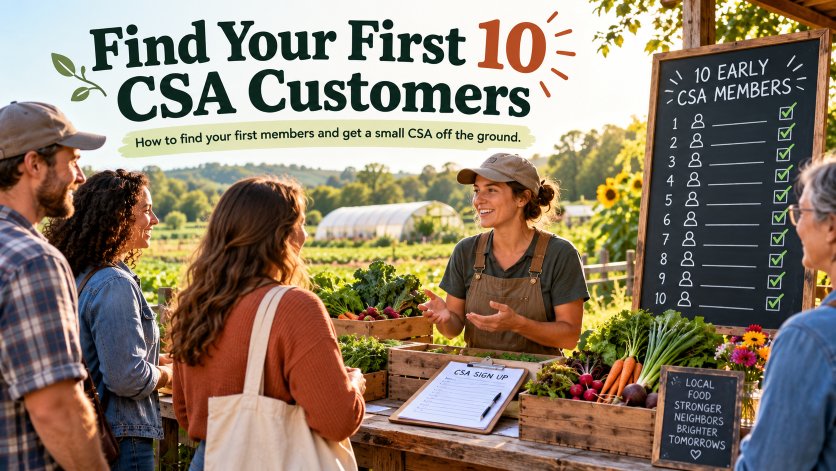 Your first 10 CSA customers don’t need to come from a big advertising campaign. Start with people who already know, trust, and would buy from you. The challenge for new growers: Growing vegetables to cover a full season is hard work. Getting people to pay for your CSA might seem harder. When you're new, nobody knows your farm yet. You have no long customer list, no years of testimonials and no crowd waiting for CSA registration to open. That's why I wouldn't stress out about acquiring 50 customers. I'd concentrate on Your First 10 CSA Customers. Those first sign-ups give you something more valuable than just ten sales. They give you experience, feedback, photographs, referrals and the beginnings of a local reputation. And you don't need a sophisticated marketing campaign to find them. You need conversations. Your First 10 CSA Customers Are Usually Found Close to HomeYou might be tempted to start by advertising to strangers. Instead, start closer to home. Your first prospects might include:
The advantage is simple: these people already know something about you. You're not trying to convince a complete stranger that a new farm can be trusted. You're giving someone who already knows you an opportunity to become an early customer. That makes Your First 10 CSA Customers primarily a relationship-building exercise rather than an advertising exercise. First, Figure Out a Simple Way to Explain Your CSANew growers sometimes become uncomfortable when the conversation turns to selling. A simple script helps. Knowing roughly what you want to say makes the conversation more natural. Try something like: I'm launching a small CSA this season and taking on my first 10 members. You'll get a box of fresh seasonal vegetables each week for 12 weeks. Would you like me to send you the details? - or - We're got a bigger garden this season, with limited quantities of fresh seasonal vegetables for sale. It's first-come, first-served. Would you like me to put you the list? That's enough to get the conversation started. At a farmers market, you might say: We're opening a few CSA memberships this season. If you'd like weekly vegetables directly from the farm, can I send you the information? The purpose isn't to hard-sell anyone. It's a genuine offer to provide something of value. Prepared responses can also help when prospects ask predictable questions about reliability, pricing and why they should buy from a new grower. Have your answers ready for these often-repeated questions. Make the First Purchase EasyNot everyone may be ready to pay for an entire CSA season immediately. That's OK. Instead of pushing for the big commitment, have a smaller step ready. One possibility is a trial basket. For example: Try a $20 vegetable basket this week. No commitment. If you like what we're growing, I'll send you the CSA details. Another is a genuine founding-member benefit: We're limiting our first CSA to 10 households so we can serve everyone well. Our first members will receive a bonus basket later in the season. You can also offer payment options, but you need to make sure to get sufficient funds upfront to pay for your season start. The New Terra Farm CSA offered 50% payment on sign-up, and 50% due when the first delivery was made. Ask for Referrals EarlyOnce you have two or three happy members, finding Your First 10 CSA Customers gets easier. Ask them to introduce someone. A simple referral offer might be: If you have a friend who would enjoy the CSA, send them my way. If they join, I'll put a bonus item in both of your boxes later this season. Now one customer can potentially produce another. That is particularly valuable for a small CSA because customers tend to know other people with similar interests in local food. Treat the First 10 Like InsidersCustomer acquisition needs to be accompanied by customer retention. CSA farms can experience a 40% turnover in members from one season to the next. So the interaction shouldn't stop just because you collected a cheque. Your early members can become the foundation of the next season. Collect their names and emails. Send a short weekly farm note. Tell them what's coming. Add the occasional unexpected bunch of herbs or another small extra when you have it. Ask what they enjoyed most. Personal recognition, short insider updates and occasional surprises are simple ways of strengthening early customer loyalty. No complicated CRM software required; It does requires paying attention. What Happens After Your First 10?Once you have Your First 10 CSA Customers, you no longer have to rely entirely on promises. You can show actual CSA boxes. You can share photographs from pickups. You can quote customer feedback. Members can recommend you. You also begin learning what customers actually value rather than what you thought they would value (prepare to be surprised). That's why I'd rather see a beginning grower work hard to serve ten customers extremely well than rush to sign up 50 before you're ready. The first ten are your testing ground. They help you build the farm people will eventually talk about. So don't wait for word of mouth to magically appear. Make a list of 20 or so potential customers. Start five conversations today. Ask people to join. Remember, nothing happens until somebofy buys something Then serve the ones who say 'yes' so well that they help you find the next ten. That's exactly how New Terra Farm CSA grew from 16 families to more than 90 families in just a couple years. Next Steps: Build the Farm Behind the CustomersFinding your first customers is only the beginning. The next job is building a simple, reliable growing system that can keep those customers supplied and help the farm earn its keep. Starting Small? Begin With Backyard Garden ProfitsIf you're testing farm income from a backyard, garden, or small plot, Backyard Garden Profits will help you work through profitable crops, customers, pricing, harvest planning, and how much your growing space needs to earn. See Backyard Garden Profits →Ready to Build a Full Market Garden?Bootstrap Market Gardening takes the next step: building a practical small-farm business around profitable crops, real customers, manageable startup costs, and a production system you can grow over time. See Bootstrap Market Gardening →For Further ReadingHow to Start a CSA in 72 Hours Sell the Shares Before You Buy the Software Best Crops for Small Farm Profit One Acre Farm Plan |
- Home
- First 10 CSA Customers
