The Four Season Survival GardenA practical year-round food plan using seasonal planting, an unheated greenhouse, row cover, and low-energy storage.
A four-season survival garden does not mean forcing tomatoes to grow in January. It means working with the seasons: growing fresh food when conditions allow, extending harvests with simple protection, and storing dependable crops for winter.
At New Terra Farm, we combine an unheated hoophouse, an outdoor garden, row cover, succession planting, and a cold room. Together, they give us homegrown food during every month of the year.
Quick Answer: What Is a Four-Season Survival Garden?A four-season survival garden combines seasonal growing, simple season-extension tools, and dependable food storage so you can harvest or eat food from your garden throughout the year.
1. Grow with the seasons.
2. Extend the harvest.
3. Store dependable crops. The goal is not to grow everything fresh year-round. The practical goal is to have something from your garden available in every season. Want a Survival Garden Plan You Can Follow?This article explains the four-season strategy. These practical guides show you how to turn that strategy into a garden plan you can actually use.
Start Here
Bootstrap Survival GardenBuild a practical food garden without expensive equipment, complicated systems, or acres of land.
Best Value
Big Bootstrap Book BundleGet the Survival Garden guide along with a broader collection of practical books for growing food, starting small, and becoming more self-reliant.
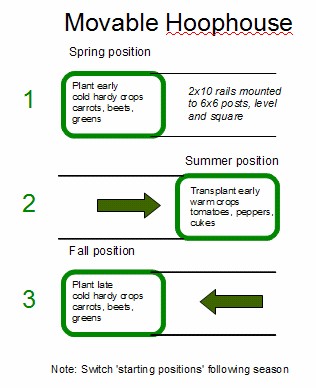
Start with the survival garden plan—or choose the bundle for the most complete collection and best overall value. My small unheated greenhouse (actually a 20' x 30' poly covered hoophouse that's movable on rails, a la Eliot Coleman) gives me abundant free energy (heat and light) that make growing season extension much more practical and cost-efficient. 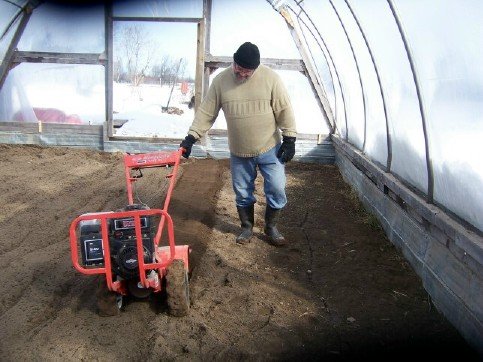 Man I love my greenhouse! Man I love my greenhouse!And a basement cold room or a root cellar captures 'free cold' in the same way a greenhouse captures free heat. This combination makes providing your own food 12 months a year a much more practical option. 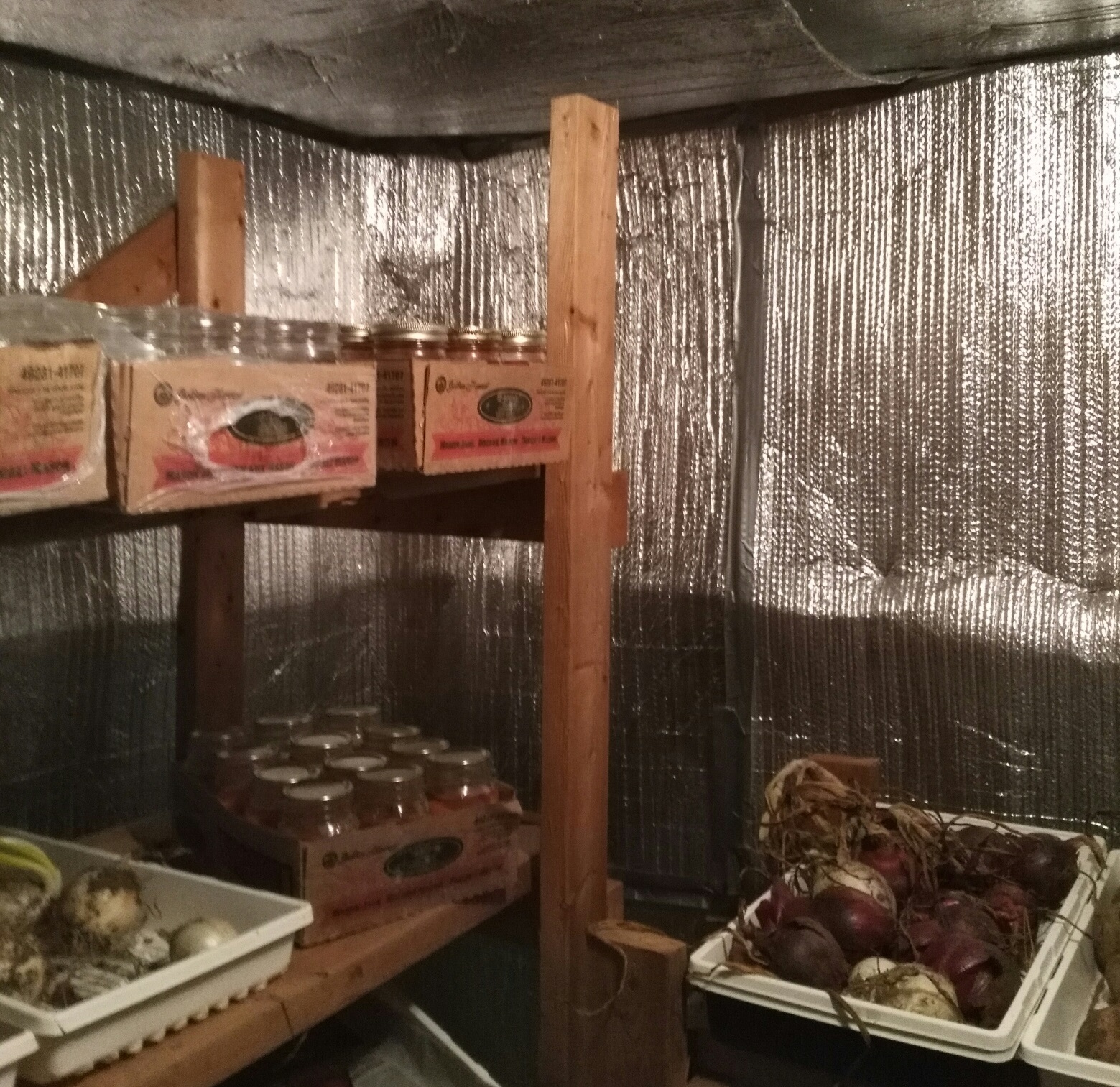 Our cold room keeps potatoes, onions, garlic, and carrots all winter. We also put our preserves on the upper shelves. Our cold room keeps potatoes, onions, garlic, and carrots all winter. We also put our preserves on the upper shelves.Four-Season Survival Garden at a GlanceEach season has a different job. The aim is to keep fresh food coming when possible and store enough dependable crops to bridge the gaps.
The system works like a relay race: stored crops carry us through winter, protected crops restart the harvest in spring, and the main garden takes over through summer and fall. But what about canning, drying and otherwise preserving food? They certainly have a place in assuring your food supply and providing variety in your diet, and I'll write more about that in upcoming articles. But, these methods also require more work and more energy than simple season extension and natural storage. Less work and less energy is a good thing, especially in parlous times. Let's look at how 12 Months of Eating works at New Terra Farm Spring: Start Harvesting Before the Outdoor Garden Is ReadyMain goal: Bridge the gap between stored winter crops and outdoor harvests. Most years I can start working the ground in my hoophouse around the end of February, and I can plant early in March. The first harvests – cold-hardy greens and salad makings are ready by mid-April. This is followed by turnips, beets and carrots. What we grow:
What makes it work:
Expected result: Fresh greens by mid-April in a Zone 5 climate. Beet and turnip thinnings contribute to salads or braised greens. I also start cole crops in March that will be transplanted to the outdoor garden in mid-April, where they can survive late frosts under row cover.
 This is the planting pan for my hoop house on rails (the one I'm tilling in the picture) This is the planting pan for my hoop house on rails (the one I'm tilling in the picture)Summer: Grow Fresh Food and Plant for WinterMain goal: Harvest plenty of fresh food while planting and tending the crops that will feed us through fall and winter. What we grow:
What makes it work:
Expected result: A steady supply of fresh summer vegetables, followed by dependable fall harvests and a useful reserve of storage crops for winter. Warm weather direct-seeded crops like beans and corn begin in June. Beans for drying are usually long season - 100+ days to maturity - so we start them early in the month. Harvesting from the outdoor gardens starts around end-May and continues through to October. The last plantings of storage crops from the outdoor garden are usually in July e.g. we plant potatoes for our winter supply around July 1. Obviously you want to delay the harvest as long as possible for your winter storage, without letting the crops get past peak maturity in the ground.
Fall: Protect the Crops That Feed You LongestMain goal: Extend the fresh harvest, gather storage crops at the right time, and protect hardy vegetables as colder weather arrives. What we grow:
What makes it work:
Expected result: Fresh vegetables well beyond the first frost, properly cured storage crops, and a dependable supply of food ready for the winter months. We replant the open ground that was the 'spring position' of the greenhouse through July and August. These are the last plantings that we will eat fresh. Once the tomatoes, peppers, and cukes are finished (end-September or so) we move the greenhouse back to protect the carrots, turnips, beets, broccoli and cabbage and greens in the 'fall position'. We add a layer of row cover as the weather gets colder. We can keep eating fresh from this store until at least Christmas.
Winter: Feast on Storage Crops Until Spring ReturnsMain goal: Rely on stored food, protect any remaining hardy crops, and prepare for the first spring plantings. What we eat:
What makes it work:
Expected result: A steady supply of stored garden food through winter, occasional fresh harvests from protected crops, and a smooth transition into early spring planting. For the winter months, we will have a cold room full of potatoes, carrots, parsnips, rutabagas, onions, and garlic that will last until the first crops are ready again. We store winter squash and sweet potatoes in warmer conditions in the house. If you have dried and stored beans and corn, you have a pretty substantial stock of survival food, even without considering canned food or small livestock (the topic of an upcoming article).
Turn Your Grocery List Into a Complete 90-Day Pantry Plan Get the free fill-in-the-blank planner that shows you what to buy, how much you need, and how to build your pantry without wasting money. Building a three-month food supply sounds simple... until we try to answer the questions that really matter. How much food do we actually need? What should we buy first? How do we avoid wasting money on things nobody eats? And how do we keep it all organized so it is still useful six months from now? The 90-Day Survival Pantry Master Planner gives you a practical, fill-in-the-blank system for building a dependable food reserve one step at a time. Inside, you will learn how to:
Stop guessing what to buy next. Enter your email below and get the complete planning system, including a printable version of the three-month shopping list. Next StepsExtend Your Growing Season—and Make Better Use of ItA greenhouse gives you more protected growing space. A year-round harvest plan shows you what to plant, when to plant it, and how to keep the harvest coming.
Build the Growing Space
Bootstrap GreenhouseBuild a practical greenhouse without spending thousands of dollars—or needing professional carpentry skills.
Three greenhouse designs for just $9
Plan the Harvest
The 52-Week HarvestCreate a practical planting and harvest schedule that makes better use of every season—without relying on a heated greenhouse.
Complete guide and worksheets for just $9 Build the protected space, plan the seasons—or use both guides together to get more food from your garden for more months of the year.
|
See something you like? Share!
Got a Great Tip (or a Question) About Survival Gardens?
Got some ideas, questions, suggestions, comments about raising food in a 'have-to' situation? Got an example of a great survival garden, maybe with pictures? Share it here.
