8 Practical Micro Farming Ideas for a Small Property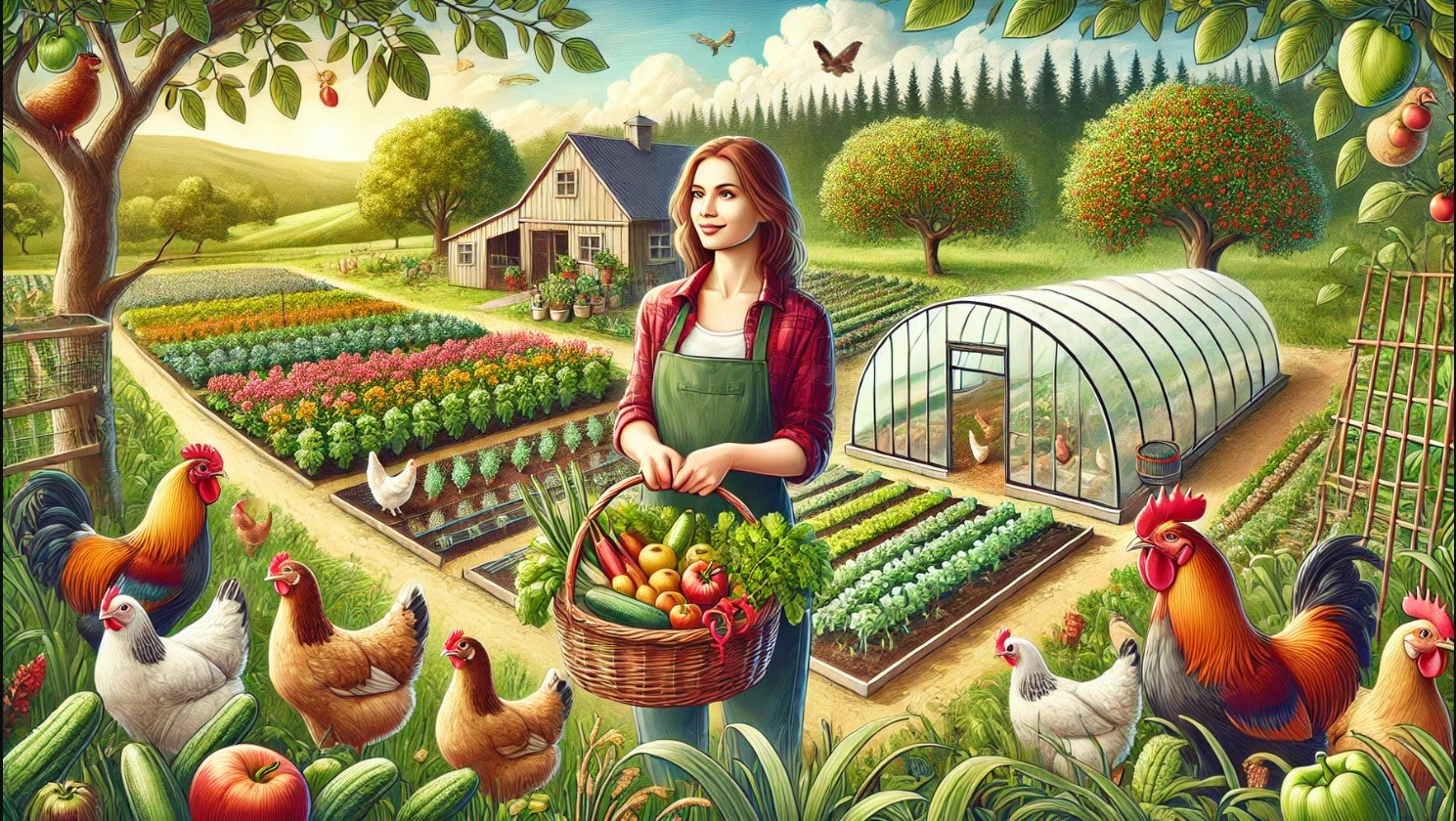 You can do a LOT even with a small property You can do a LOT even with a small property
A small property can produce food, income, or both. The trick is not cramming every possible enterprise onto one acre. It is choosing one dependable centrepiece and adding complementary crops or livestock as your skills and market grow. Below are the micro farming ideas I would consider first, based on the systems we have used at New Terra Farm. First, a little context. The old-fashioned homestead was often a
hard-scrabble place; subsistence farming left little time for anything
else. While self-sufficiency is all well and good, there are still only
24 hours in a day. So you need to think about time and labour requirements for the various crops your farm might grow.
Last piece of advice, I recommend against breeding stock on a small place; it's hard to justify keeping breeding stock year-round if you have to buy in most of their feed, and the cost of infrastructure to house them can be prohibitive. On with the show!
Quick Answer
Which Micro Farming Idea Is the Best Fit?The best enterprise depends on how much land, labour, startup money, and selling time you have available. This table gives you a practical starting point for comparing the options.
Our practical take: Garlic is one of the better choices for
growers who want a valuable crop that does not need to be sold immediately.
Microgreens offer the fastest route to repeat income, but they require
dependable weekly production and a ready market.
Not Sure Which Micro Farming Idea Fits Your Property?You want a practical side hustle you can test without quitting your job, buying a tractor, or betting the farm you do not own yet. But there are questions you should answer first: What should I actually grow if I want income? Can this really work at my scale? How do I get the most from my season? Start with the Backyard to Income Starter Pack. Learn what to grow, what can work at your scale, and how to produce dependable harvests through more of the year.
20+ Years
Small-farm experience
Up to 90 Families
Served through our CSA
Award-Winning
Farm model
Small-Property Tested
Built for limited land
Let's Break it DownSo, what micro farming ideas would I consider to start? Here's a few typical small farm enterprises that I believe have real potential for the 1 acre farm.
I like this one because it's 'scalable'; that is, you can start small and make a profit (by feeding yourself and a couple neighbours VERY well), and it can be expanded as your experience and resources grow. And if you follow the Community Supported Agriculture model (my recommendation) your start-up costs can be very low, and your CSA customers provide a market for your other farm goodies.
Best Starting Guide for Vegetable Income. Start with a short list of dependable, high-value crops rather than planting a little of everything. See the 10 Most Profitable Vegetables → Grow the Top Ten sells for $9 and is specifically positioned around cultivars, tools and strategies for profitable market-garden crops. Planning a complete farm business? See the Complete Start Farming Pack → 2. Growing Garlic. Garlic is one of the better crops for a small property because it stores well, sells at a premium, and does not require constant attention through the season. It can be sold fresh, cured, braided, or as planting stock, and the scapes provide an extra product before harvest. The main drawback is timing. Garlic ties up the bed for a long period and most of the income comes after harvest. But for growers who want a dependable, high-value crop with a reasonable labour requirement, it is hard to beat. See more about how we grow a LOT of garlic here. 3. Microgreens Microgreens are one of the fastest crops we can grow for sale. Most are ready in 10 to 25 days, and they can be produced indoors on shelves, benches, or greenhouse tables without using much land. Popular choices include pea shoots, sunflower shoots, radish, broccoli, mustard, and mixed salad blends. They can be sold to restaurants, market customers, CSA members, or through weekly subscriptions. The advantage is speed and high value from a small footprint. The challenge is consistency. Microgreens need dependable seeding, watering, temperature control, sanitation, harvesting, packaging, and regular customers. They also have a short shelf life, so production has to match actual sales. Start small, track which varieties sell, and expand only after we have a reliable weekly market. High Mowing offers a good microgreen starter kit. You can get a good deal on microgreen growing flats here. The 10-pack is a good deal. I kept about 20 flats going through the summer for my market. Winner Winner Chicken Dinner4. Laying hens. Raising chickens for free-range organic eggs can be a profitable small farm business. Farms in my area sell their eggs for up to $7/dozen, and they are always sold out. And when the 'girls' are finished their useful laying life, they can be sold as stewing hens, or made into very tasty chicken stock (for yourself or for sale.)
Laying hens can provide steady repeat sales, but they are not a hands-off enterprise. Startup costs include a secure coop, nesting boxes, feeders, waterers, fencing, and the birds themselves. The daily labour is modest but unavoidable. Hens need feed, fresh water, egg collection, cleaning, and regular health checks every day, including weekends and bad weather. Feed is usually the largest ongoing expense, so profitability depends on controlling waste and charging enough to cover the real cost per dozen. Secure housing is equally important. A poorly protected flock can be wiped out quickly by raccoons, foxes, coyotes, weasels, or birds of prey.
Raising meat chickens is a quick-turnaround business. About 9 weeks from day-old chicks to 5-lb roasters, and you have a return on your investment. You can also rotate the birds through your garden area and fields; they will improve both. The short production cycle is attractive, but brooding, feed waste, predators and processing can quickly eat through the expected margin. How to Raise Meat Chickens explains the complete system and includes portable-coop plans. Get the Meat Chicken Book and Plans—$9 → Prefer to buy rather than build? Get your Garvee coop here 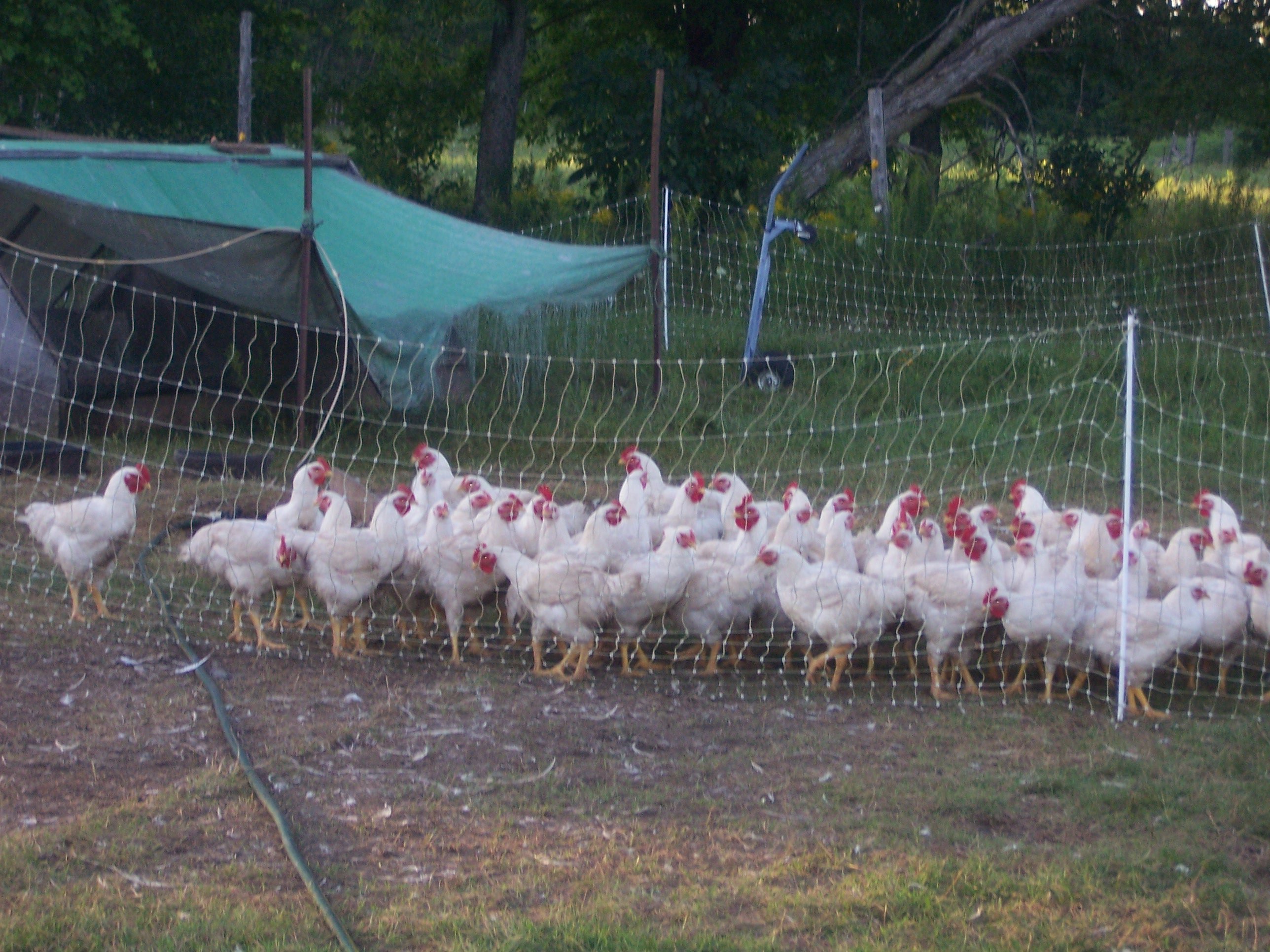 Raising chicken in portable pens is a profitable micro farming idea Raising chicken in portable pens is a profitable micro farming ideaMore Micro Farming Ideas6. Perennial crops. I think the 1
acre farm should definitely dedicate some space to perennial crops. Here
again you need to think in terms of reducing labour requirements. For
example, I would plant blackberries rather than raspberries. Less suckering will occur, and therefore less thinning is required.
Another possibility is table grapes; I have a friend that grows about 12 varieties that do well here in the Great White North so you can probably find a variety adapted to your area. While grape vines do require pruning, the cuttings can be rooted to produce more vines (and another crop for you.) Before planting anything, check:
Tree fruit is another good micro farming idea, if you stay away from varieties that need excessive pruning or spraying. For example, we're looking into Asian pears right now, They produce quicker than apples, and are pretty much immune to pests in my area. Note that tree crops and vine crops like grapes can be planted on fence lines where they won't interfere too much with your other crops. I also planted one paddock with hazelnuts. They are planted on 10 foot centres, in rows 25 feet apart. This spacing means I can pasture chickens or pigs between the rows (in electric net pens). Tree crops are a long-term farm asset, not a quick-income solution. They best suit growers who own the land, have several years to wait, and can protect young trees from wildlife and livestock.
A backyard nursery can produce a surprising amount of income from a small space. Instead of selling vegetables by the pound, we are selling young plants with a much higher value per square foot. Good options include:
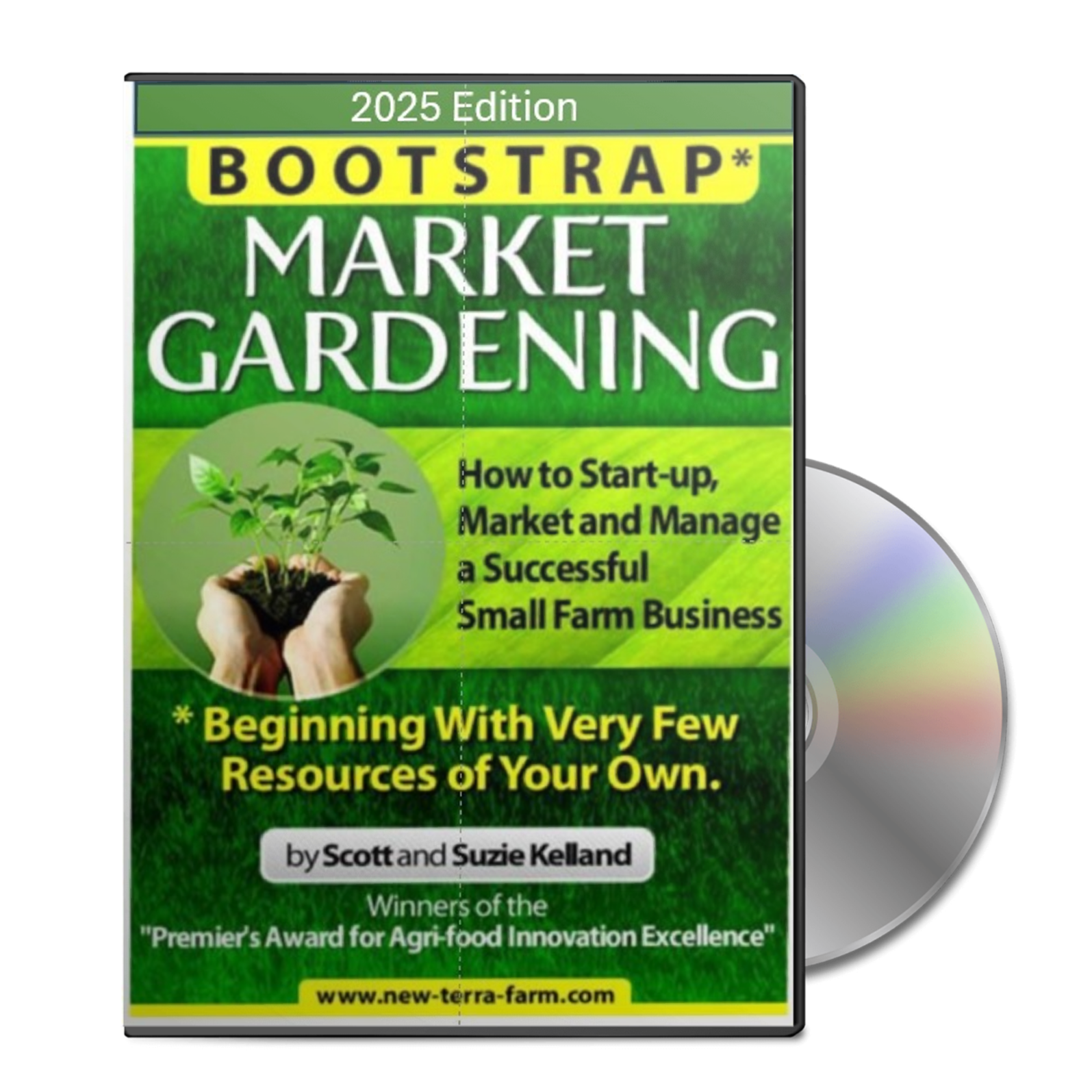
The main advantage is flexibility. You can start with a few trays, pots, and dependable plants, then expand the lines customers actually buy. The main challenges are regular watering, good propagation skills, and a short, busy spring selling season. Of course, it would be difficult to learn how to manage all these crops at once. Pick a 'centre-piece' crop from the micro farming ideas above, and build the others around it as your experience grows. It's very possible to integrate 8 or 10 crops on a one acre farm. Important: CSA Market Gardens typically have the highest net incomeBootstrap Market Gardening shows you step-by-step how to start-up, market and manage an organic market garden based on CSA principles. New edition includes my Garden Planner spreadsheet. Get Bootstrap Market Gardening only from New Terra Farm. OR, get Bootstrap Market Gardening and a lot more in the Complete Start Farming Pack Ready to Turn the Ideas Into a Working Farm Plan?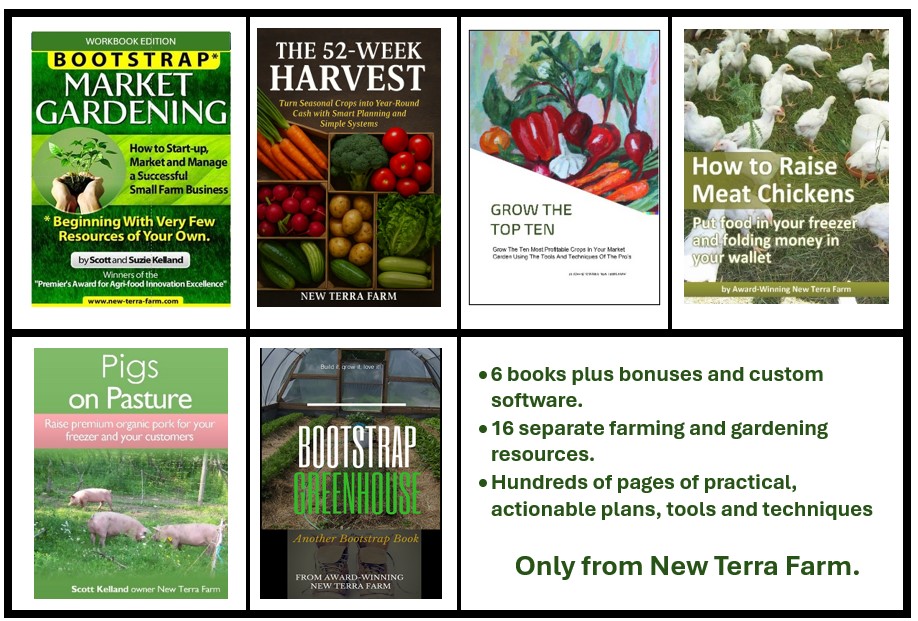 The biggest mistake is trying to launch six farm enterprises at once. Pick one centrepiece that can provide either dependable food or dependable income. Learn the system, find the customers and get it operating smoothly. Then add enterprises that use different seasons, spaces and skills. We do not need to build the entire dream in year one. We need to build one workable piece, and make sure it pays its way. The Complete Start Farming Pack brings the main New Terra Farm systems into one practical package. It includes guidance on market gardening, profitable crops, greenhouses, meat chickens, pigs, season planning, and the business tools needed to move from “someday” to a workable small-farm plan. Read the guides, pick an enterprise and get started. If you are serious about building a diversified farm without wasting years on trial and error, this is the place to start. Next StepsSave 15% on a selection of farm and garden supplies. Read my Garvee review here See hundreds of useful projects for the small grower and homesteader. The Self-Sufficient Backyard Grow for maximum profit Grow the Top Ten Most Profitable Vegetables More like Micro Farm Ideas
|


See Something You Like? Share!
Got questions to ask, stories to tell?
Share your organic market gardening question, or comment, or story.
I'm an affiliate for some products I promote on this site. This means I get a small commission for a product you buy through a link on one of my pages. This doesn't cost the buyer anything, but provides me an additional income to help support these pages.