How to create a good part-time income with a small CSALet's suppose you have a small property (even a big back yard)and you
could use some additional part-time income. Creating a small CSA
(Community Supported Agriculture) market garden could pay you $25 or $30 dollars an hour, working part-time. Here's how to get started.
You can also offer half-shares for the 2-person families, at a lower
price. You can read more about
planning and setting prices here Want to BUILD the CSA rather than just read about one?You want to grow for customers, earn dependable income, and build a small farm business without spending a fortune first. Build your first $10,000 garden with Bootstrap Market Gardening, our complete step-by-step course for planning, marketing, launching, and managing a profitable small garden business based on CSA principles. Find customers → set the share price → plan production → collect money before planting → deliver the season! Make next season your best season ever. Your land is waiting! Sign 'em up, get paid!If they are interested, sign them up right away. Make sure you get part
or even full payment up front (a common practice with CSA's). This
up-front payment will cover your start-up costs and pay your salary for
the season.
You next need to know your harvest season e.g. how many weeks can you
provide veggies for. I usually plan for 20 weeks of delivery, beginning
in June and ending October, because that suits my growing area and
climate.
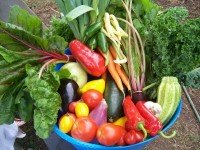 Imagine bring a basket like this to your small CSA customers each week Imagine bring a basket like this to your small CSA customers each weekAnd here's a lesson I learned the hard way: order your seed early. One season I waited a little too long and a couple of my 'old favorite' cultivars were sold out. A couple of seed houses I can recommend, both family- owned SeedsNow and employee-owned Johnny's Seeds have a great selection, good prices and lots of 'grow-how' information on their websites. 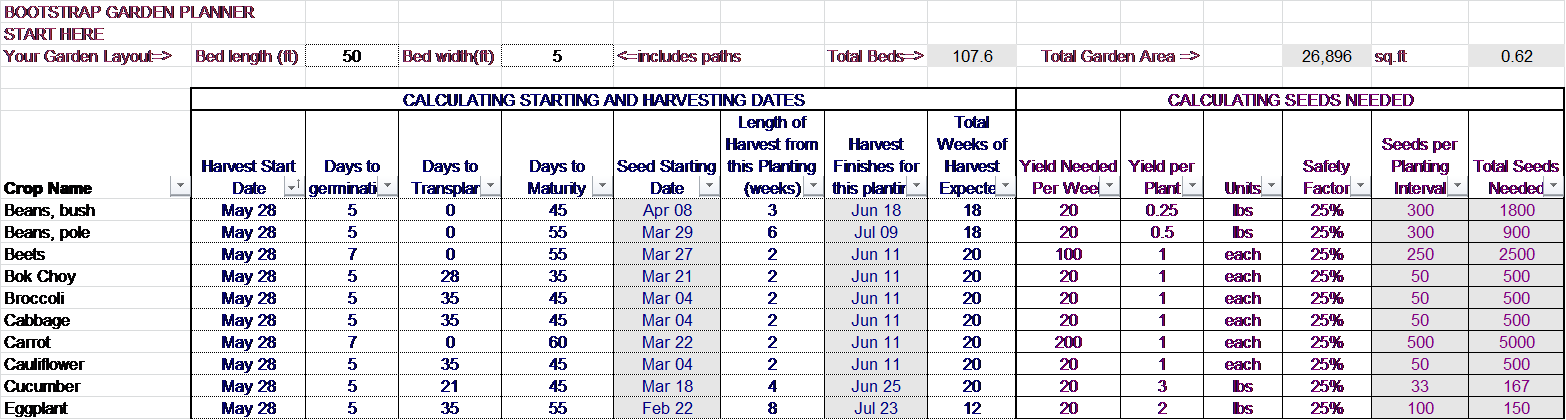 New Terra Farm Garden Planner Spreadsheet New Terra Farm Garden Planner SpreadsheetHow much money can I make from a small CSA?So, how much can I net from my small CSA market garden? A garden this size can be managed with mostly hand-tools. You can rent a rototiller to do the initial dig-up, or hire a contractor. Your other major expense will be for supplies - e.g. seed starting trays and plugs, row cover, drip hose for irrigation, seed. Your start-up costs should stay well under a thousand dollars.
If you want the short list of what to grow get this guide. A New Grower Made a BIG Mistake...Let me tell you the story of a beginning market gardener's big mistake. . . I have a good friend and neighbour who started market gardening after I did. In fact, she worked on my farm to learn the business. She was passionate about growing great organic vegetables, she was a hard worker, and in fact she learned a lot about successfully growing for market.
|

- Home Page ›
- Community Supported Agriculture ›
- Small CSA
