Weed Control for Profit: Less Labour, More Yield, Better Beds
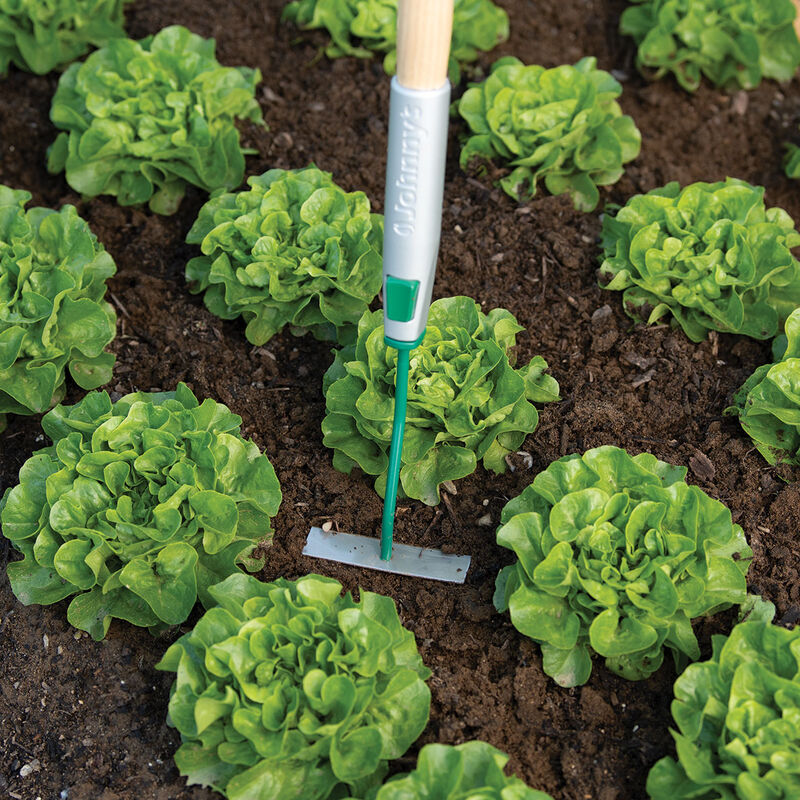 Weed control for profit does NOT start with the hoe
Most growers think weed control is about effort. Work harder. Stay on top of it. Never let weeds get ahead.
That sounds reasonable until July arrives and the garden turns into a full-time wrestling match. Bed management gets away from us. Harvests consume time. The weeds seem stronger than ever. And somehow, after all the work, yields are less than optimal.
This is a lesson we learned the hard way here on the farm: weeds are not just a nuisance problem. They are a profit problem.
Every hour spent fighting weeds is an hour not spent harvesting, selling, planning, or improving the farm. Worse still, weeds compete aggressively during the exact stage when crops are most vulnerable. By the time weeds are “bad enough” to notice, much of the yield loss has already happened.
That realization changes how you think about weed control entirely.
The goal is not spotless beds. The real goal is protecting yield with the least amount of labour possible.
That shift in thinking can completely transform how a market garden or small farm operates.
Most Weed Control Happens Too Late
This is where a grower unknowingly sabotages themself. A bed gets prepared, seeded, and watered. Then the waiting for the seedlings to appear. Unfortunately, the weeds often appear first.
Then comes the panic reaction. Out comes the hoe. Or we jump into hand weeding.
The problem is that reactive weed control is incredibly expensive in terms of:
- labour,
- energy,
- time,
- and lost production.
Weeds grow faster than crops because they are designed to exploit disturbance. Bare soil, sunlight, moisture, and open space are invitations. The gardener often unintentionally create ideal weed conditions over and over again.
Not the gardener's fault. The reality is much simpler: most weed pressure is created by the system itself. That’s actually good news.
Because systems can be changed.
Effective Weed Control Starts Long Before Weeds Appear
Weed control is not primarily about removing weeds.
It’s about preventing conditions that allow weeds to dominate in the first place.
That means weed control starts with:
- garden layout,
- bed design,
- spacing,
- irrigation,
- timing,
- and minimal soil disturbance.
In other words, the best weed control often happens before the crop is even planted.
Gardening advice usually focuses on tools and techniques. But tools are only part of the story. If the underlying system constantly creates weed pressure, no tool will save you for long.
We found that some beds required endless maintenance while others stayed relatively manageable with almost no effort. The difference wasn’t motivation or discipline.
It was design.
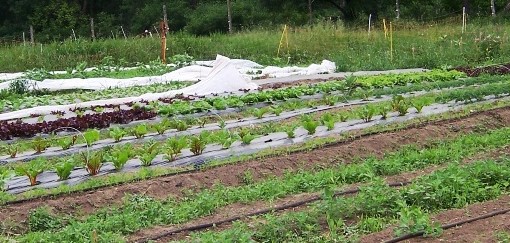 Plastic mulch and drip irrigation are two key tools to weed control for profit.
Design Matters More Than Most Growers Realize
Poor garden layout creates work.
Irregular beds slow cultivation. Wide pathways become weed nurseries. Overhead irrigation waters weeds just as effectively as crops. Slow canopy closure leaves exposed soil for weeks.
Each small inefficiency compounds.
On the other hand, well-designed systems reduce labour automatically.
Standardized beds. Defined pathways. Tight canopy spacing. Targeted irrigation. Covered soil.
The impact of these design decisions is minor individually. Together they can dramatically reduce weed pressure.
The garden begins doing more of the work for you. That’s where weed control starts becoming profitable instead of exhausting.
The Most Valuable Weed Control Happens Before Planting
Most growers prepare a bed and plant immediately. That feels productive. It also guarantees competition.
The smarter approach is often to prepare the bed early, trigger weed germination intentionally, eliminate that first flush, and then plant the crop. This was one of the biggest breakthroughs for us.
This is known as the stale seedbed method, and it's one of the simplest and most powerful labour-saving systems available to small growers.
Instead of fighting weeds beside delicate seedlings, you eliminate them before the crop ever emerges.
That single timing adjustment can save dozens of hours over a season. It also protects yield during the most critical growth window.
The same principle applies to tarping systems. Instead of constantly disturbing soil and waking up new weed seeds, tarping allows biology to do much of the work quietly underground.
Less disturbance = less weed pressure = less labour.
This is what weed control for profit is all about.
Constant Soil Disturbance is the Enemy of Weed Control
Growers unintentionally create fresh weed flushes every time they cultivate aggressively.
Deep hoeing, repeated tilling, and constant soil disturbance expose buried weed seeds to light and moisture. Then the cycle begins again.
The work itself is recreating the problem.
A more effective approach is shallow, targeted, minimal disturbance. Kill weeds early. Avoid waking new seeds. Keep soil covered whenever possible.
Once you understand this principle, many common gardening habits suddenly stop making sense.
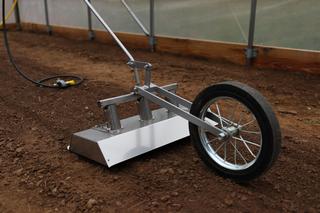 Kill it with fire: Flame weeding for fun and profit
Mulch and Cover Crops Are More Than “Nice to Have”
It's common to think of mulch as mainly about moisture retention or appearance. That dramatically undersells its value.
Good mulch systems:
- suppress weed germination,
- stabilize soil moisture,
- reduce labour,
- improve soil structure,
- and protect crop performance.
The same applies to cover crops. A properly managed cover crop is not wasted space. It is a weed suppression tool, a fertility system, and a labour-management strategy rolled into one.
This is one of the biggest differences between reactive growers and systems-oriented growers. Reactive growers see empty ground.
Systems growers see opportunity.
Weed Control Is Really About Energy Management
Weed control is not just about weeds. It is about preserving energy.
Small growers and homesteaders don’t quit because crops fail. They often quit because the workload becomes relentless. The garden starts controlling them instead of the other way around.
That’s why low-labour systems matter so much.
A cleaner system creates:
- calmer seasons,
- smoother harvests,
- less burnout,
- and more consistency.
The financial impact matters too. When labour drops and yields improve at the same time, profit increases naturally.
That’s the equation behind Weed Control for Profit:
Less labour + more yield = better garden profits.
Your Garden Should Get Easier Over Time
This is another idea we strongly believe in: A well-managed garden should not become harder every season.
It should become easier.
- Weed pressure should decline.
- Beds should improve.
- Systems should tighten.
- Labour should decrease.
If the opposite is happening, the issue is usually not effort. It is system design.
Weed Control for Profit Starts Here
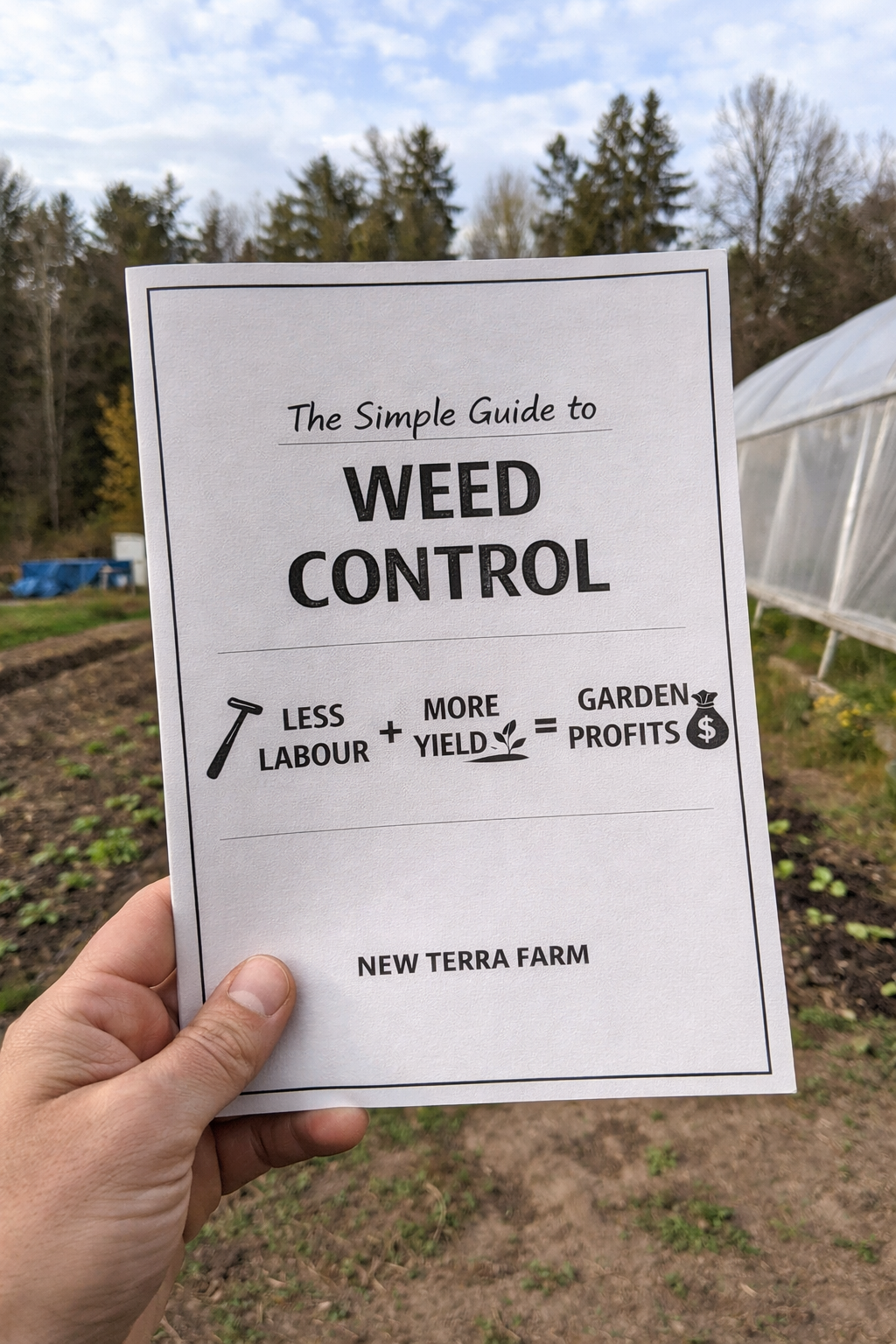
That’s exactly what The Simple Guide to Weed Control was written to address.
The book is not about perfection. It’s about leverage.
It’s about understanding how weeds actually behave and building systems that quietly prevent problems before they start.
Inside the book, we cover:
- design-first weed control,
- stale seedbeds,
- flame weeding,
- tactical tarping,
- mulch systems,
- cover crops,
- pathway management,
- and low-disturbance growing strategies.
More importantly, we connect these ideas into a complete system focused on:
- lower labour,
- higher yield,
- and better profitability.
Because the truth is, weed control done properly changes everything else too.
- Harvesting gets easier.
- Crop quality improves.
- Successions become smoother.
- Stress drops.
- The farm starts feeling manageable again.
If you’re tired of endless hand weeding and want a smarter approach to weed control for profit, The Simple Guide to Weed Control was written for you.
See Something You Like? Share!
Recent Articles


-
Sell CSA Shares Before Buying Software: Find Members First
Oct 04, 26 09:37 AM
 Sell CSA shares before buying software. Find members, collect deposits and choose CSA management tools only when your farm really needs them.
 -
New Terra Farm market gardening book shows you success step-by-step
Sep 22, 26 05:51 AM
 Start-up, market and manage a successful organic market garden with my Bootstrap Market Gardening Book
 -
The Flexible CSA Without a Packing-Shed Crisis
Sep 16, 26 10:25 AM
 Here's how to offer a flexible CSA with vacation holds, share sizes and limited swaps without creating a packing and scheduling nightmare.
